Duct Insulation Wrap (Benefits, Installation & Cost)
Your HVAC system works hard to keep your home comfortable, but without proper insulation around your ductwork, a surprising amount of conditioned air can escape before it ever reaches the rooms you live in. This wasted energy increases utility bills, reduces comfort, and puts unnecessary strain on your system. Adding or upgrading duct insulation wrap is one of the most effective ways to improve efficiency and protect your home. If you’re exploring improvements like this, reviewing helpful information about duct insulation upgrades can help you better understand your options.
Here’s what you’ll learn in this guide:
- Why insulating your ducts is essential for energy savings and system performance
- The main benefits homeowners see after wrapping their ductwork
- A step by step overview of the installation process
- How different insulation types compare
- Typical cost ranges and what affects pricing
- When to choose professional service over DIY
Why Duct Insulation Wrap Matters for Your Home

Insulating your ductwork doesn’t just help with efficiency; it plays a major role in the health, comfort, and overall performance of your HVAC system. Many homeowners in Okatie and surrounding areas have older or poorly insulated ducts located in attics or crawl spaces, where changes in temperature and humidity can cause significant heat loss or condensation problems.
Here are the biggest reasons duct insulation should be on your home improvement checklist:
- Energy Savings: Proper insulation prevents air leaks and temperature loss, helping your HVAC system operate more efficiently and lowering monthly bills.
- Comfort and Temperature Control: Insulated ducts help deliver even airflow and temperature throughout your home. Without insulation, rooms farther from the air handler may feel too warm or too cool.
- Condensation Prevention: When warm, humid air meets cold ducts, condensation forms. Insulation wrap prevents moisture buildup and the mold risks that come with it.
- Extended HVAC Lifespan: When your system doesn’t have to work as hard to compensate for energy loss, components last longer and require fewer repairs.
- Noise Reduction: Insulation can dampen the sound of air movement and system vibration, creating a quieter home environment.
5 Key Parts of Installing Duct Insulation Wrap
Installing duct insulation wrap can vary in complexity depending on the condition and layout of your ductwork. Below is a breakdown of the steps involved so you understand what goes into a proper installation.
1. Inspecting the Condition of the Existing Ductwork
Before wrapping ductwork, it’s important to check for leaks, loose connections, and damaged insulation. If airflow is escaping, insulation alone won’t fix the issue.
During the inspection, technicians look for:
- Cracked or broken insulation
- Loose or separated duct joints
- Moisture or mold buildup
- Rodent or insect damage
- Sections of uninsulated metal duct
Repairing these areas first ensures the insulation is effective and long lasting.
2. Cleaning the Duct’s Exterior Surface
Dust and debris prevent insulation wrap from adhering properly. The outer surface of the ducts must be clean, dry, and free of contaminants to ensure a tight fit.
This step is especially important for homes in humid areas like Okatie and surrounding neighborhoods, where outdoor air entering attics or crawlspaces can cling to the ducts.
3. Measuring and Cutting the Insulation
Accurate measuring ensures all duct surfaces are covered, including irregular shapes or bends in the system. Insulation wrap is typically cut slightly oversized to ensure full coverage and prevent gaps.
Depending on the system, the insulation may require:
- Additional layers for extra protection
- Special cuts for air handler connections
- Higher R values for extreme temperatures
4. Securing the Wrap
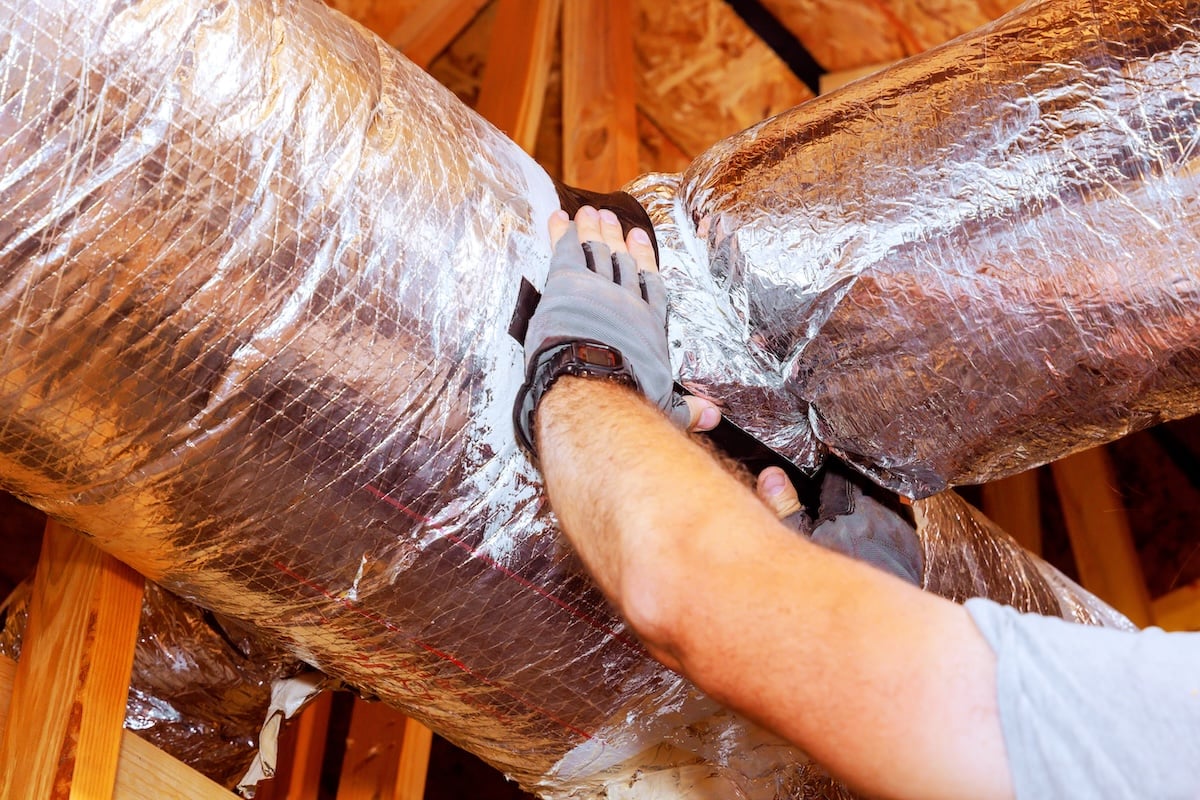
Once positioned, insulation is secured using mechanical fasteners or foil tape designed for HVAC applications. This step ensures the insulation remains tight against the duct and doesn’t shift over time.
Properly installed wrap should:
- Fit snugly without compressing
- Cover every seam
- Leave no exposed metal
A neat installation not only performs better but also lasts longer.
5. Sealing Joints and Final Inspection
After wrapping, all seams are sealed with foil-backed insulation tape to block air leaks. A final inspection verifies that all ducts are fully covered, joints are sealed, and the wrap is installed correctly.
A thorough final check prevents long term problems and confirms the insulation’s effectiveness.
Types of Duct Insulation Wrap

Not all insulation is created equal. Some materials perform better in certain environments or offer advantages depending on the age or design of your HVAC system. Here’s a closer look at common insulation options used for residential ductwork.
Fiberglass Duct Wrap
Fiberglass wrap is one of the most common materials used in residential duct insulation. It includes a foil-backed exterior that reflects heat and improves durability.
Benefits:
- High temperature resistance
- Good sound absorption
- Widely available
Best for: Most attic or crawlspace ductwork
Reflective Foil Insulation
Reflective foil, often used in eco friendly products like EcoFoil, works by reflecting radiant heat away from or back into the ductwork.
Benefits:
- Lightweight and easy to install
- Great for hot climates
- Moisture resistant
Best for: Warm regions like Okatie and surrounding areas
Rigid Foam Board
Rigid foam panels provide insulation and structural support, offering a more durable option for exposed ducts.
Benefits:
- High energy efficiency
- Moisture resistant
- Long lasting
Best for: Commercial settings or basements
Spray Foam Insulation
Spray foam offers an airtight seal and excellent R value but is typically more expensive and requires professional installation.
Benefits:
- Exceptional air sealing
- High insulation strength
- Conforms to irregular spaces
Best for: Hard to reach ductwork or homes with extreme temperature swings
Comparing DIY vs Professional Duct Rewrapping
Many homeowners consider wrapping ducts themselves, but DIY insulation often leads to incomplete coverage or improper installation. Professional installers have the tools, experience, and materials to get the job done safely and effectively.
Here’s a quick comparison:
| Category | DIY Installation | Professional Installation |
| Cost | Lower upfront | Higher upfront |
| Durability | Often varies | Consistent and long lasting |
| R Value Performance | Depends on skill | Guaranteed to meet standards |
| Coverage | May miss hidden sections | Full system coverage |
| Mold and Moisture Protection | Limited | High quality sealing and materials |
| Safety | Risk of handling fiberglass improperly | Safe and efficient |
While DIY may work for small projects, full HVAC duct systems benefit greatly from expert attention.
How Much Does Duct Insulation Wrap Cost?
The cost to install duct insulation wrap can vary depending on several factors, including home size, duct layout, material quality, and whether repairs are needed before installation.
Here’s an overview of typical cost considerations:
Home Size
Larger homes with more extensive duct networks will naturally cost more to insulate. Multiple zones or long runs increase both material and labor.
Type of Insulation
Fiberglass wrap is typically more affordable, while reflective foil and spray foam cost more due to higher performance or installation requirements.
Accessibility
Attics, crawlspaces, and basements all present different challenges. Tight or hard to reach areas may require additional labor.
Existing Condition
If ducts show signs of:
- Leaks
- Mold
- Damaged insulation
- Pest activity
…repairs may be necessary before wrapping.
Regional Climate
Homes in humid areas like Okatie and surrounding regions often require insulation with higher moisture protection, slightly increasing costs.
Average cost range:
- Small homes: $700 to $1,500
- Medium homes: $1,500 to $2,500
- Large homes: $2,500 to $4,000+
Professional wrapping services often include the added value of inspections, sealing, and improved system performance.
Tips for Maintaining Your Duct Insulation Wrap

Once your ducts are insulated, routine care helps preserve performance and extend lifespan. Here are simple but effective maintenance tips:
- Inspect visually each year: Look for sagging wrap, loose tape, or exposed metal.
- Replace damaged sections quickly: Tears or crushed insulation reduce efficiency.
- Maintain proper attic and crawlspace ventilation: Helps regulate temperature and humidity.
- Address moisture issues immediately: Damp insulation should be replaced to prevent mold.
- Schedule annual HVAC maintenance: Ensures ducts and insulation remain clean and functional.
Consistent attention helps prevent problems and maximize the benefits of insulation.
Improve Efficiency and Comfort With Professional Duct Insulation
Duct insulation wrap provides substantial advantages for your home, from better temperature control to reduced energy costs. Whether you’re dealing with uneven airflow, rising utility bills, or an aging system, insulating your ductwork is an investment that pays off season after season. When done professionally, it enhances HVAC performance, improves indoor comfort, and protects your ductwork from damage.
Pro Shine Cleaning proudly serves Okatie and surrounding areas with high quality duct wrapping solutions, natural product options, and detailed inspections to ensure long lasting results. To schedule an appointment or request more information about improving your home’s efficiency, contact us today. Pro Shine Cleaning is committed to helping you create a healthier, more energy efficient home.
Clean Air Is Just A Call Away!