How Long Does Air Duct Cleaning Take? 6 Key Timing Factors
One of the most common questions homeowners ask before scheduling a cleaning is how long the technician will be in their home. Knowing how long does air duct cleaning take helps you plan your day, evaluate whether a quoted timeframe is realistic, and recognize when something is off about the scope of work being proposed. Understanding what a thorough cleaning of a home’s air distribution system actually involves is the context that makes the timing question answerable.
In this guide, you will learn:
- Why the time it takes to clean air ducts varies so widely between homes and providers
- 6 key factors that directly affect how long air duct cleaning takes
- What realistic time estimates look like for different home sizes and system types
- Why an unusually fast completion should raise questions about the scope of work
- How to use timing expectations to evaluate provider proposals and on-site behavior
- What factors can extend a cleaning beyond the initial estimate and when that is justified
The Honest Answer to How Long Air Duct Cleaning Should Take
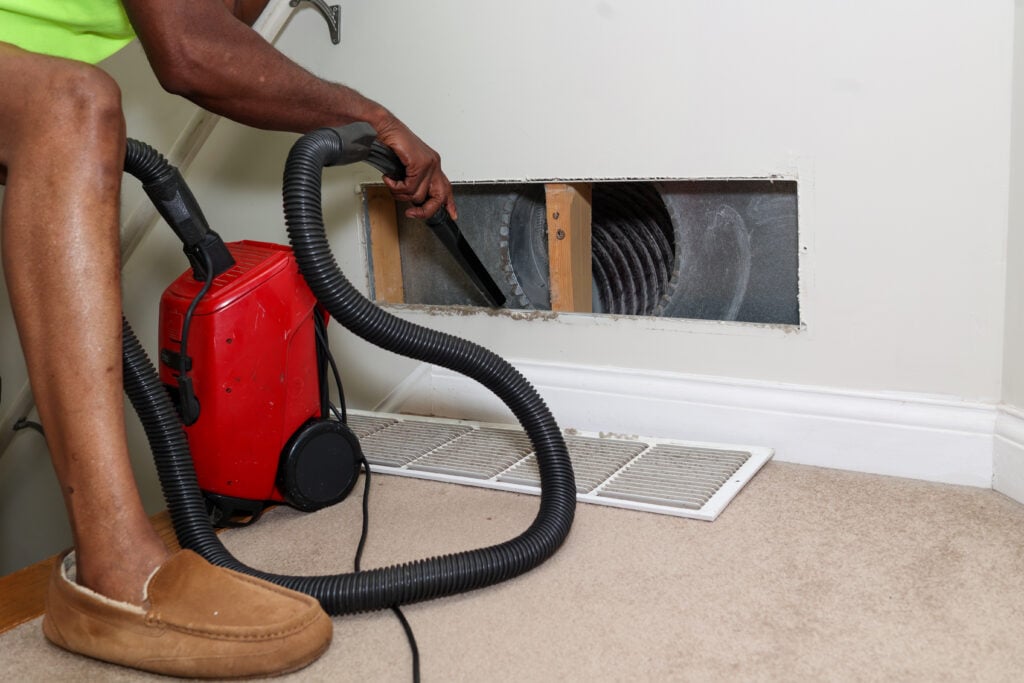
There is no single correct answer to how long air duct cleaning takes, and any provider who quotes a fixed time before knowing anything about your home should be evaluated carefully. A thorough, professional cleaning of a standard single-family home typically takes between two and five hours, but that range is wide enough to be almost meaningless without context. The actual time depends on a set of specific variables that differ meaningfully from one home to the next.
In Lady’s Island and surrounding areas, where homes range from compact one-story properties with simple duct layouts to larger multi-zone residences with complex HVAC configurations, the cleaning time for a 1,200-square-foot home and a 4,000-square-foot home can differ by three hours or more under identical conditions. Understanding what drives that difference helps you develop a realistic expectation for your specific home and evaluate whether what you are being told aligns with what your system actually requires.
- Home Size Is the Starting Point But Not the Whole Story: Square footage gives a rough baseline for estimating cleaning time because it correlates with the number of duct sections that need to be accessed, but two homes of identical square footage can have meaningfully different duct counts and configurations that produce different cleaning durations.
- The Scope of the Cleaning Determines the Timeline: A cleaning that covers only supply registers will take significantly less time than one that addresses supply ducts, return ducts, the air handler, blower, coil, and drain pan. The difference in scope produces a difference in time, but also a difference in how complete the cleaning actually is.
- Equipment Capacity Affects Efficiency: A provider using a high-capacity truck-mounted vacuum system can often move through a cleaning more efficiently than one using undersized portable equipment, because the larger system maintains consistent negative pressure throughout the cleaning without needing to reposition as frequently. Better equipment typically produces both better results and more efficient use of time.
- System Condition Adds Unpredictability: A system with years of heavy buildup, biological contamination, or structural issues discovered during inspection will take longer to clean than a well-maintained system receiving a routine cleaning. These delays are legitimate and should be communicated in real time rather than absorbed silently into the schedule.
- Thoroughness Has a Minimum Time Requirement: A cleaning that takes less than 90 minutes in any home larger than 1,000 square feet almost certainly did not include a full system inspection, proper negative pressure setup, mechanical agitation of all duct sections, and post-cleaning verification. Speed and completeness are not compatible in professional duct cleaning.
6 Key Timing Factors That Determine How Long Air Duct Cleaning Takes
These six factors are the primary drivers of cleaning duration. Understanding each one helps you develop a realistic estimate for your home and a framework for evaluating whether the time a provider quotes matches the scope they are proposing to deliver.
1. The Size of the Home and Total Number of Duct Sections
The number of duct sections in a home is the single most direct determinant of cleaning time because each section must be individually accessed, mechanically agitated, and verified before the technician moves on. A small home with 10 to 14 supply registers and 2 return grilles requires significantly less total cleaning time than a larger home with 25 to 30 supply registers and 5 return grilles, even if both homes receive the same level of attention per section.
As a general framework, professional duct cleaning takes approximately 15 to 20 minutes of active cleaning time per supply register when the process is performed thoroughly. This does not include setup time, air handler cleaning, or post-cleaning verification, each of which adds time to the total visit duration.
- A home with 12 supply registers might require 3 to 4 hours total including setup, cleaning, component work, and verification
- A home with 25 or more supply registers may require 5 to 7 hours or more for a comparable level of thoroughness
- Homes with multiple HVAC systems serving different zones may essentially require two complete cleaning sequences, which roughly doubles the time relative to a single-system home of similar total square footage
2. The Number of HVAC Systems and Air Handlers
Every air handler in the home is a distinct mechanical unit that requires its own cleaning scope, including the cabinet interior, blower wheel, evaporator coil area, and drain pan. A home with two air handlers requires that this component cleaning process be repeated for each unit, which adds significant time to the total visit regardless of how quickly the duct sections themselves are cleaned.
In Lady’s Island and surrounding areas, where larger coastal homes often feature separate HVAC systems for upper and lower floors, and where properties with in-law suites or guest quarters may have additional independent units, a cleaning visit that does not account for multiple air handler cleaning sequences in the time estimate is likely planning to skip one of them.
- Each air handler adds approximately 30 to 60 minutes of additional time for cabinet, coil, and drain pan cleaning when performed thoroughly
- A home with three HVAC zones and three air handlers should expect a cleaning time substantially longer than the estimate for a single-zone home of the same square footage
- Ask your provider specifically how many air handler units they will be cleaning and confirm that each one is included in the quoted time and scope
3. The Level of Buildup and Contamination in the System

A system receiving its routine cleaning after a two-to-three-year interval requires meaningfully less cleaning time per duct section than one being cleaned for the first time after a decade of operation. Heavy buildup requires additional agitation passes to fully dislodge debris from duct surfaces, and significant biological contamination may require additional time for documentation, treatment application, and post-treatment verification that a routine cleaning does not.
Any factors that accelerate debris accumulation in the duct system will similarly add to cleaning time when that buildup is eventually addressed. Homes with pets, homes with high occupancy, homes that have recently undergone renovation, and homes in environments with high particulate loads all tend to have heavier-than-average buildup that translates to longer cleaning times.
- A first-ever cleaning on a 15-year-old system may take 50 to 100 percent longer than the same provider’s estimate for a routine cleaning of a comparable home
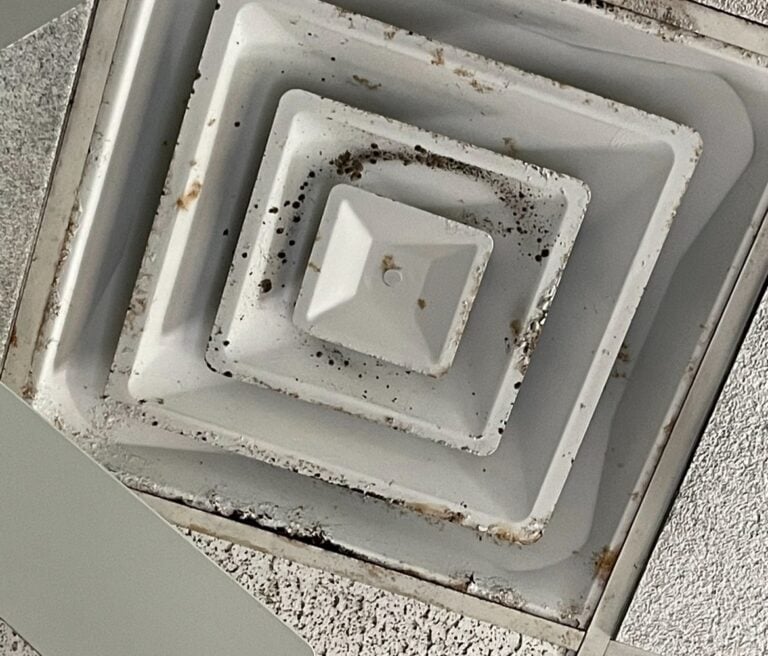
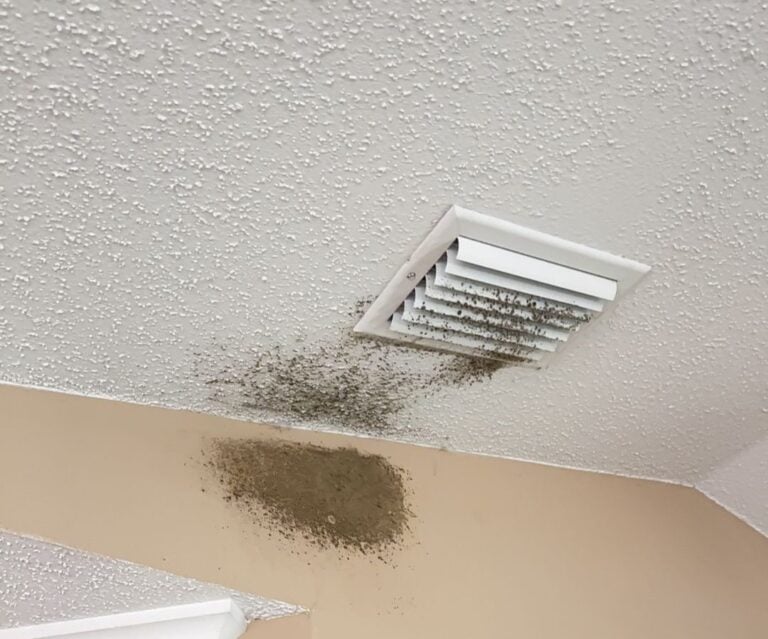
- Mold presence, when confirmed during inspection, adds the time required for appropriate documentation, treatment application, and post-treatment verification to the total visit duration
- Post-renovation cleanings take longer than routine ones because construction debris including drywall dust, wood particles, and insulation fibers requires additional agitation passes to fully remove from duct surfaces
4. Duct Material Type and System Accessibility
Different duct materials require different tools and techniques, and some require more careful, methodical cleaning than others. Sheet metal ductwork tolerates powered rotary brushes and aggressive pneumatic agitation that would damage flex duct or duct board. Cleaning flex duct sections requires slower, more controlled technique that takes more time per linear foot than cleaning rigid metal duct. Duct board construction, common in older homes, requires the gentlest approach of all and therefore the most time per section.
Accessibility is an equally significant timing factor. Duct sections routed through easily accessible attic or crawl space areas can be reached quickly. Sections running through finished wall cavities, above drop ceilings in occupied spaces, or through mechanical chases that require disassembly to access require substantially more setup and access time that adds to the total visit duration.
- A home where all ductwork runs through an open, accessible attic may clean significantly faster than a home of the same size where ducts run through finished walls and require access panels to reach
- When access panels must be cut into ductwork to enable thorough cleaning of sections that cannot be reached from registers, the panel cutting, cleaning, and patching adds time that should be reflected in the provider’s estimate
- Homes with a mix of duct material types, which is common in properties that have been renovated or had systems added over time, require tool changes and technique adjustments between sections that add time relative to a home with a single consistent duct material throughout
5. Whether Add-On Services Are Included in the Scope
The base cleaning scope for a professional air duct cleaning visit covers the duct network, registers, and air handler components. A number of add-on services that may be genuinely indicated by inspection findings add time to the total visit: antimicrobial treatment applied to cleaned duct surfaces, UV light installation inside the air handler, coil cleaning performed as a separate detailed service, dryer vent cleaning bundled with the duct cleaning appointment, or duct sealing applied to leaking joints identified during inspection.
Each of these services adds a defined amount of time to the visit. Antimicrobial fogging after cleaning typically adds 30 to 60 minutes depending on the home size and the application method. A detailed coil cleaning performed as a separate service rather than as part of the air handler surface cleaning adds similar time. If multiple add-ons are included or indicated, the total visit time can extend well beyond the initial cleaning estimate.
- Ask for a time estimate that reflects the full scope of work being proposed, including any add-ons, rather than an estimate for the base cleaning alone
- If add-on recommendations arise during the visit based on inspection findings, ask how much additional time each one will require and whether that can be accommodated in the same appointment or should be scheduled separately
- A cleaning appointment that runs significantly longer than estimated because of add-ons that were not discussed in advance is a transparency problem worth addressing with the provider
6. The Equipment the Provider Uses and Its Capacity
A provider using a truck-mounted vacuum system with a high airflow rating can often clean a given home more efficiently than one using an undersized portable unit, because the larger system maintains consistent negative pressure throughout the full cleaning sequence without the repositioning and reconnection pauses that smaller equipment requires. The result is not just faster cleaning but often more thorough cleaning, because consistent negative pressure throughout the process means loosened debris is captured more completely at each stage.
The agitation tools matter as much as the vacuum equipment. A powered rotary brush system driven by a professional drill or pneumatic motor agitates debris from duct surfaces more quickly and more thoroughly than hand-rotated brush kits, which means each duct section takes less time to clean to the same standard with powered equipment than with manual tools.
- Higher-capacity equipment does not mean rushed cleaning. It means the same level of thoroughness takes less clock time, which is a benefit for the homeowner in terms of schedule disruption without any reduction in cleaning quality
- A provider who quotes an unusually short cleaning time may be using higher-capacity equipment and working with experienced efficiency, or may be planning to clean a subset of the system. Ask specifically about scope rather than accepting a time estimate as the primary indicator of quality
- Providers who use undersized equipment may require more time per section to achieve adequate results, which can make their estimates appear competitive on clock time while actually reflecting a lower per-section cleaning standard
What Realistic Time Estimates Look Like for Different Homes
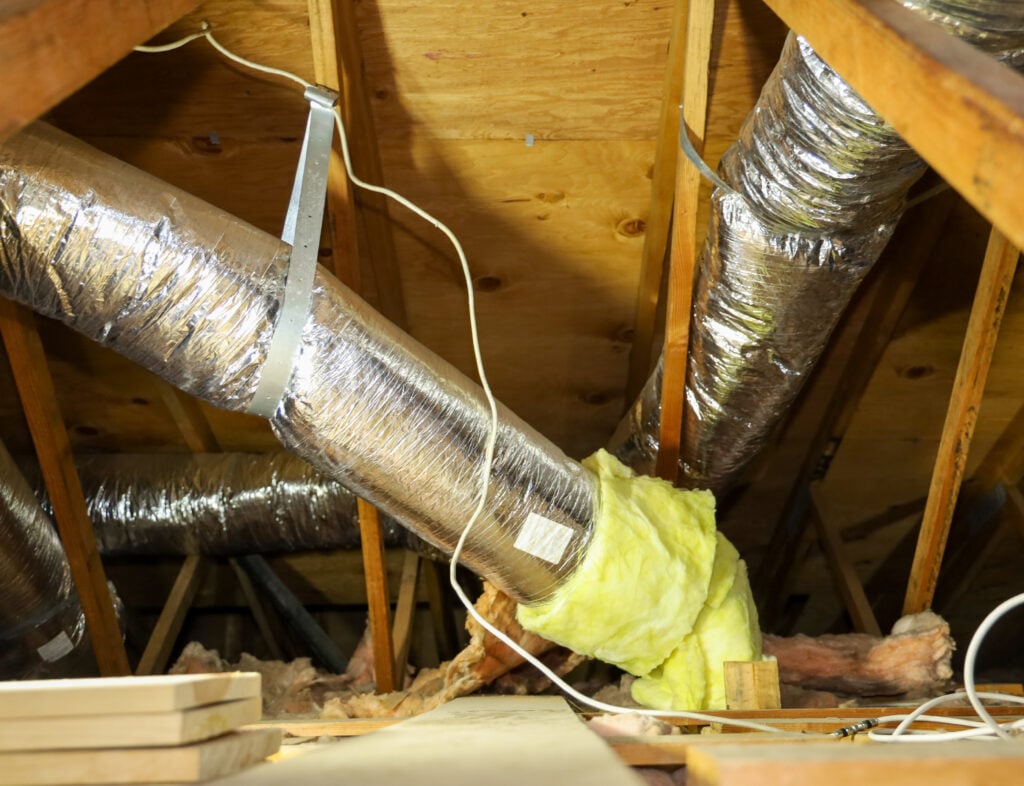
These estimates reflect thorough, full-system professional cleaning that includes pre-cleaning inspection, negative pressure setup, supply and return duct cleaning, air handler and component cleaning, and post-cleaning verification. They are ranges rather than fixed times because the factors above produce meaningful variation within each home size category.
| Home Size | System Count | Estimated Cleaning Time |
| Under 1,200 sq ft, single system | 1 air handler | 2 to 3 hours |
| 1,200 to 2,000 sq ft, single system | 1 air handler | 3 to 4 hours |
| 2,000 to 3,000 sq ft, single system | 1 to 2 air handlers | 4 to 5 hours |
| 3,000 to 4,500 sq ft, dual system | 2 air handlers | 5 to 7 hours |
| Over 4,500 sq ft or complex configuration | 2 or more air handlers | 6 to 8 hours or more |
These estimates assume average buildup levels and standard accessibility. First-time cleanings on older systems, homes with significant contamination, and properties with limited duct access can add one to two hours or more to any of the ranges above.
Why Unusually Fast or Slow Completions Both Deserve Scrutiny
The time a provider spends in your home is one of the most observable proxies for the scope of work actually performed. When a cleaning finishes significantly faster than expected, or drags on far longer than the estimate without a clear explanation, both situations are worth examining.
When It Finishes Too Quickly
A cleaning that wraps up in under 90 minutes for any home with more than 10 registers should prompt direct questions about what was included. Proper setup of negative pressure containment alone takes 20 to 30 minutes in most homes. A thorough inspection requires additional time before any cleaning begins. If the technician was done in 90 minutes, the time math does not support a full-scope cleaning having taken place.
Ask specifically which duct sections were cleaned, whether the return ducts and air handler were addressed, and whether post-cleaning inspection was conducted. If the answers are vague or the scope turns out to have been limited to the supply registers only, the homeowner has grounds to request a partial refund or a return visit to complete the scope that was quoted.
When It Takes Much Longer Than Estimated
An unexpectedly long cleaning visit is not automatically a sign of poor efficiency. The most common legitimate causes of extended cleaning time are significant contamination discovered during inspection, structural issues requiring access panels, or genuine system complexity that was not apparent from the initial estimate. In Lady’s Island and surrounding areas, older homes with original ductwork that has never been cleaned can legitimately take twice as long to clean as the provider’s initial estimate suggests.
What distinguishes a legitimate extension from a problematic one is communication. A provider who identifies something unexpected, explains it clearly to the homeowner, and asks for authorization to proceed with additional work is handling an extension professionally. A technician who simply continues working without explanation and presents a higher invoice at the end is not.
What a Well-Managed Appointment Looks Like
A professional cleaning appointment begins with a clear time estimate tied to a specific scope of work, includes real-time communication if findings during inspection change the expected duration, and concludes with a written service report that allows the homeowner to verify that the time spent corresponds to work actually performed. Timing that cannot be explained by the scope documented in the service report is a legitimate question to raise with the provider.
Book Your Cleaning With a Clear Picture of What to Expect
Air duct cleaning that is done right takes the time it takes, and the right answer for your specific home depends on the six factors covered in this guide. What you can walk away from this post knowing is that a thorough cleaning of any home larger than 1,200 square feet should take at least three hours when performed to a professional standard, that any estimate significantly below that threshold should prompt questions about scope, and that the most important thing to verify is not how long the cleaning takes but whether the time was spent on every part of the system that needed attention.
Pro Shine Professional Cleaning serves homeowners throughout Lady’s Island and surrounding areas with professional duct cleaning that takes the time the job actually requires, documents every step of the process, and gives you a written service report that connects the time spent to the work performed. Whether you are trying to plan your schedule around an upcoming appointment or evaluating a quote that seems too good to be true, contact us today and let our team give you an honest, scope-based estimate for your specific home.
Clean Air Is Just A Call Away!