
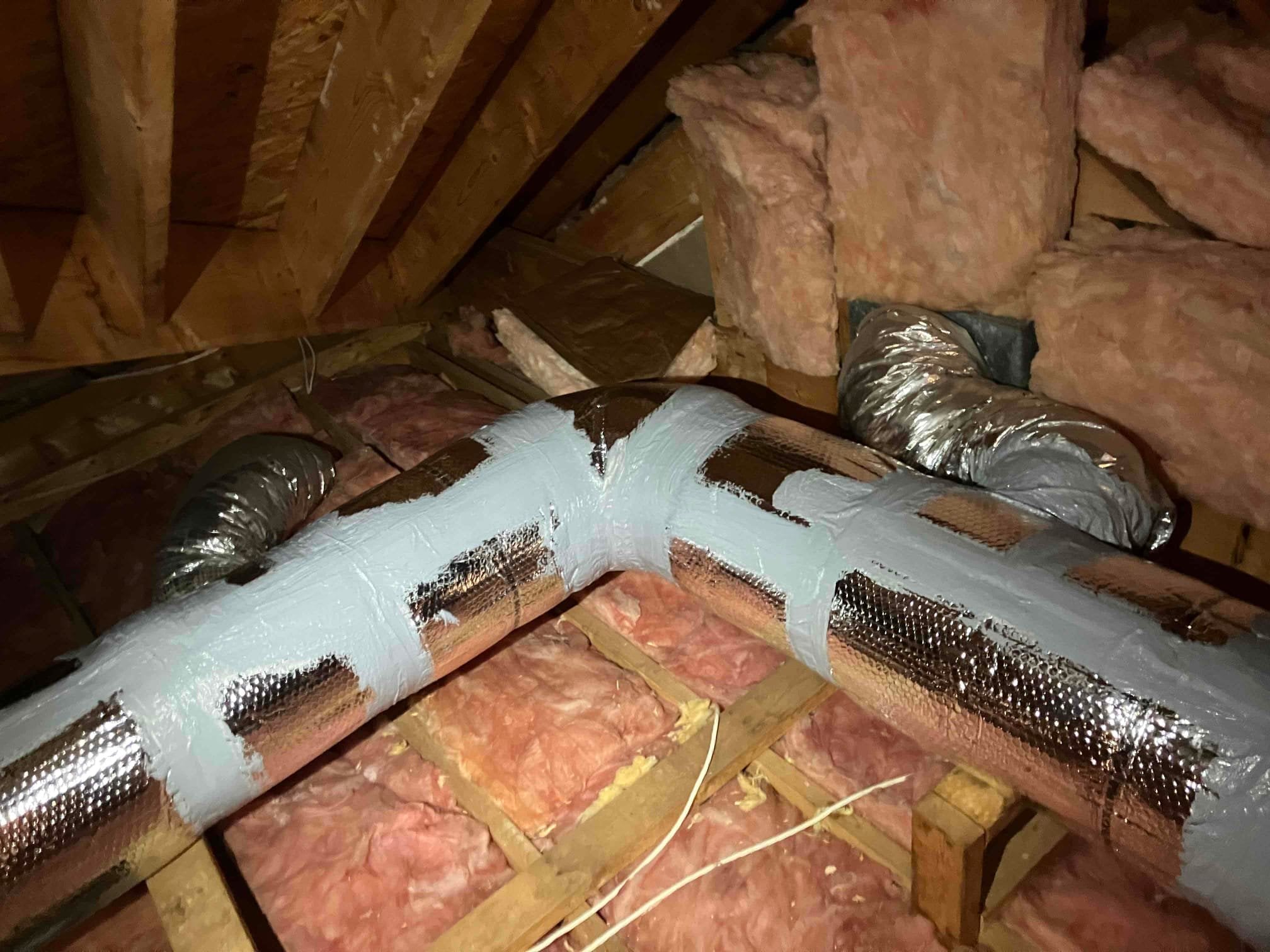
7 Key Benefits Of Thermal Barrier Insulation For Homes
Your home’s comfort and energy efficiency depend on more than your HVAC system. Thermal barrier insulation is what stands between your conditioned indoor air and the extreme temperatures outside, and when it degrades or fails, your heating and cooling equipment works significantly harder to compensate. In hot, humid climates where temperature swings are dramatic for much of the year, the quality of your insulation directly affects what you pay every month. Understanding how well-insulated ductwork contributes to a more efficient home is where lasting comfort and savings begin.
In this guide, you will learn:
- What thermal barrier insulation is and how it works in a residential setting
- 7 measurable benefits it delivers for your home and your household budget
- The different types of radiant barrier insulation used in duct systems and attics
- Warning signs that your existing duct insulation or radiant barrier has failed
- How dust accumulation and moisture affect insulation performance over time
- When professional duct rewrapping is the right next step for your home
How Thermal Barrier Insulation Improves Energy Efficiency at Home

Thermal barrier insulation is not a single product. It is a category of materials designed to slow the transfer of heat between two environments, in this case between the conditioned air inside your ductwork and the unconditioned space surrounding it. Whether your ducts run through an attic, a crawl space, or an exterior wall cavity, the air inside them is constantly trying to equalize in temperature with whatever environment surrounds it. Without an effective thermal barrier, that equalization happens rapidly, which means your carefully heated or cooled air arrives at your vents at the wrong temperature.
In Spring Island and surrounding areas, where summer attic temperatures routinely climb above 130 degrees Fahrenheit and the gap between indoor and outdoor conditions can be extreme for eight or more months of the year, the demands placed on duct insulation are particularly severe. Homeowners who understand what a thermal barrier actually does are far better positioned to recognize when it is failing and take action before the energy losses compound into a significant financial burden.
- Energy Loss Prevention: Without insulation, duct systems running through unconditioned spaces can lose 20 to 30 percent of conditioned air to temperature equalization before it ever reaches a vent. A proper thermal barrier dramatically reduces this loss and keeps the air at the temperature your thermostat set it to.
- HVAC Load Reduction: When conditioned air maintains its temperature through the full duct run, the HVAC system reaches the thermostat setpoint faster and with fewer total runtime hours. This directly reduces the mechanical load on every component of the system.
- Condensation and Moisture Control: In humid climates, cool duct surfaces surrounded by warm moist air create condensation on the exterior of uninsulated or poorly insulated ducts. This moisture contributes to mold growth, deterioration of surrounding building materials, and accelerated corrosion of metal duct sections.
- System Longevity: An HVAC system that does not have to compensate for significant heat gain or loss in the duct system operates within its designed parameters, which reduces wear on the compressor, heat exchanger, air handler, and all associated mechanical components.
- Consistent Room-by-Room Comfort: Ductwork with intact thermal barrier insulation delivers air at consistent temperatures throughout the home, eliminating the hot and cold room problem that many homeowners assume is an HVAC sizing or balancing issue when it is actually a duct insulation failure.
7 Key Benefits of Thermal Barrier Insulation for Energy Savings
The benefits of effective thermal barrier insulation touch nearly every aspect of how a home performs, feels, and costs to operate. Here are the seven most significant benefits homeowners experience when their duct insulation is functioning as it should, and what they stand to lose when it is not.
1. Lower Monthly Bills Through Improved Energy Efficiency
The most immediate and quantifiable benefit of thermal barrier insulation is the reduction in energy costs that comes from keeping conditioned air at its target temperature throughout the full duct run. The U.S. Department of Energy estimates that homes with poorly insulated or uninsulated ductwork can experience energy losses that raise heating and cooling costs by 20 to 30 percent or more compared to homes with properly insulated systems. For households in Spring Island and surrounding areas running HVAC systems year-round, this percentage represents a meaningful sum across twelve months of utility billing.
- Properly insulated ducts require fewer runtime hours to achieve the same indoor temperature setpoint
- Reduced runtime translates directly into lower electricity or gas consumption per billing cycle
- The energy savings compound over years, making duct insulation one of the highest-return improvements available to homeowners
2. More Even Temperatures Through Radiant Heat Control
One of the most common homeowner complaints, particularly in multi-room or multi-story homes, is that some rooms never quite reach the thermostat setting while others overheat or overcool. This inconsistency is frequently misattributed to HVAC sizing or duct balancing issues, but in many cases the actual cause is radiant heat transfer and thermal loss in the duct run serving those specific rooms. When the air cools or warms significantly between the air handler and the vent, the room receiving that air simply cannot be conditioned to the same standard as rooms served by shorter or better-insulated duct sections.
Effective thermal barrier insulation manages radiant heat exchange between the duct and its surroundings, ensuring that air delivered to every vent arrives within a consistent temperature range of what the system intended. The result is uniform comfort across every room without pushing the thermostat to compensate.
3. Reduced Condensation Risk and Dust Accumulation Inside Ducts
In humid climates, the physics of condensation make uninsulated or degraded duct insulation a moisture problem as much as an energy problem. When cool supply air travels through a duct surrounded by warm, humid attic or crawl space air, the exterior surface of the duct can drop below the dew point of the surrounding air. At that point, moisture condenses directly onto the duct surface and, without proper insulation to prevent the temperature differential, that condensation occurs persistently with every cooling cycle.
Moisture inside and around ductwork accelerates dust accumulation on duct surfaces and in the surrounding space. Damp surfaces attract and hold airborne particulates far more effectively than dry ones, meaning that poor insulation contributes directly to a faster rate of debris buildup that affects both air quality and system performance.
4. Extended Lifespan for Your HVAC Equipment
Every degree of thermal loss in the duct system is a degree that the air handler, compressor, or furnace must compensate for during the next operating cycle. An HVAC system running in a home with heavily degraded duct insulation spends more cumulative hours at full operational load than the same system in a home with intact insulation. That additional runtime accelerates wear on the compressor, heat exchanger, blower motor, and refrigerant components, shortening the overall lifespan of equipment that represents thousands of dollars in replacement cost.
Restoring effective thermal barrier insulation around the duct system reduces the operational burden on the HVAC unit and can meaningfully extend the interval before major repairs or full system replacement becomes necessary.
5. Improved Indoor Air Quality

The connection between thermal barrier insulation and indoor air quality is less obvious than the energy and comfort benefits, but it is equally real. Degraded or absent duct insulation creates the persistent condensation conditions that support mold growth on duct surfaces. That mold, along with the bacteria and dust mite populations that also thrive in damp duct environments, is introduced into the airstream every time the HVAC system runs and distributed through every supply vent in the home.
Well-maintained thermal barrier insulation eliminates the moisture conditions that allow biological contaminants to establish themselves in the duct system in the first place, making it one of the foundational elements of genuinely healthy indoor air quality rather than just a comfort or efficiency consideration.
6. Quieter HVAC Operation Throughout the Home
Thermal barrier insulation around ductwork provides acoustic benefits in addition to thermal ones. The insulation material absorbs some of the sound generated by air moving through the duct at velocity, which reduces the audible whooshing, rattling, and vibration noise that homeowners with uninsulated or deteriorated duct systems often notice near supply registers. In living areas, bedrooms, and home offices where quiet matters, this acoustic dampening effect is a meaningful quality-of-life improvement that comes as a secondary benefit of properly maintained duct insulation.
7. Higher Home Value and Documented Energy Savings
For homeowners planning to sell their property or undertake an energy audit, the condition of the duct insulation system has a direct bearing on the home’s assessed energy performance. Homes with intact, properly installed thermal barrier insulation achieve better ratings on energy assessments and are more competitive in markets where buyers are increasingly focused on long-term operating costs and documented energy savings. A verifiable history of duct maintenance and insulation integrity can serve as a meaningful differentiator in the selling process for homes of similar size and age.
Types of Radiant Barrier Insulation and Attic Insulation for Duct Systems
Not all thermal barrier insulation is the same material, and the type used in a particular home depends on the age of the ductwork, the type of ducts installed, the location of the duct runs, and the specific performance requirements of the HVAC system. Here is an overview of the insulation types most commonly found in residential duct systems and attics, and what each one offers.
- Radiant Barrier Foil: Reflective radiant barrier foil is used in attic installations to reduce the radiant heat gain that drives surface temperatures on duct exteriors. It works by reflecting radiant heat away from the duct rather than absorbing it, significantly reducing the temperature differential between the attic environment and the duct surface. Radiant barrier foil is particularly effective in hot climates where attic temperatures are a primary source of heat gain into the HVAC duct system.
- Radiant Barrier Insulation with Air Space: For maximum performance, radiant barrier insulation is most effective when installed with an air space between the foil layer and the duct surface. The air space acts as a secondary thermal buffer, preventing direct conductive contact between the reflective surface and the duct while the foil handles the radiant component. Systems designed with a deliberate air space between insulation layers outperform those where the foil is in direct contact with the surface it is protecting.
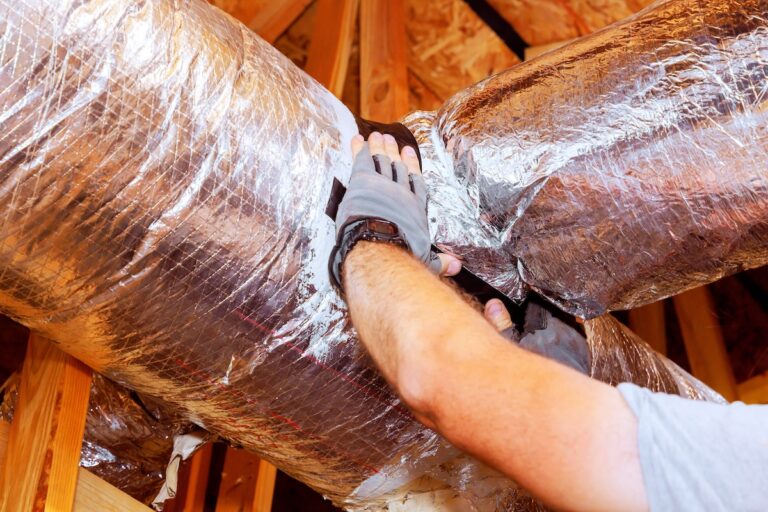
- Duct Wrap Fiberglass Blanket Insulation: The most widely used thermal barrier for residential ductwork, fiberglass duct wrap consists of a blanket of fibrous glass material with a foil or vinyl vapor barrier facing. Applied directly around metal or flex duct sections, it provides good thermal resistance per inch of thickness and is effective at controlling condensation when the vapor barrier facing is properly installed and intact.
- Attic Insulation for Duct Protection: In homes where ductwork runs through the attic, adding or upgrading attic insulation to bring it above the duct level is one of the most effective ways to reduce the temperature differential the duct insulation must manage. Bringing attic insulation up to current recommended R-value levels reduces the thermal load on duct wrap and extends its effective lifespan significantly.
- Metal Building Insulation for Duct Sections: For sheet metal duct sections and plenums, particularly in metal buildings or utility spaces, rigid board insulation provides high thermal resistance in a thin profile. It is especially effective where space constraints prevent the use of thicker duct wrap but must be properly sealed at all joints and penetrations to provide a continuous vapor barrier and prevent gaps where radiant heat can enter.
How Dust Accumulation and Attic Conditions Signal Failing Insulation

Thermal barrier insulation does not fail all at once. It degrades gradually through physical damage, moisture saturation, pest intrusion, and simple age, and the signs of that degradation often appear in the home’s performance before they are visible during an inspection. Knowing what to look for helps homeowners in Spring Island and surrounding areas take action at the right time rather than waiting until the damage has compounded into a significantly more expensive repair.
Dust Accumulation Around Vents and on Duct Surfaces
One of the most telling early indicators of insulation degradation is accelerated dust accumulation on and around the ductwork. As insulation breaks down and moisture begins to form on duct surfaces, those damp surfaces attract and hold airborne dust and debris far more readily than properly insulated, dry duct exteriors. Dark dusty staining around ceiling registers or visible debris collecting on duct surfaces in accessible areas like the attic are signs that the thermal barrier around those ducts is no longer performing as designed.
Radiant Heat Gain Showing Up as Higher Energy Bills
If your energy bills have increased gradually without a corresponding change in usage patterns or utility rates, radiant heat gain through degraded attic insulation and failing duct insulation is one of the most likely explanations. In attic environments, radiant heat from the roof deck can significantly raise temperatures around duct sections whose insulation has thinned, compressed, or lost its reflective facing. This heat gain forces the HVAC system to work harder on every cycle, and the cumulative effect becomes visible in the monthly utility statement before it produces any other visible symptom.
Visible Damage to Radiant Barrier Foil and Duct Wrap
In attics, crawl spaces, and mechanical rooms where ductwork is accessible, torn, punctured, or separated radiant barrier foil and duct wrap are the most straightforward indicators of thermal barrier failure. Flex duct outer jackets that show punctures or tears, metal duct sections with duct wrap that has slumped away from the duct surface, and radiant barrier foil with gaps or delamination at seams are all conditions that eliminate the thermal barrier and expose the duct to direct temperature exchange with the surrounding environment.
Comparing Duct Insulation Condition Over Time
| Insulation Condition | Typical Age Range | Performance Impact | Recommended Action |
| Intact radiant barrier foil, fully adhered duct wrap | 0 to 10 years | Full thermal barrier performance | Routine inspection only |
| Minor compression, small foil gaps | 10 to 15 years | Moderate radiant heat gain begins | Monitor, plan for rewrapping |
| Torn sections, moisture infiltration, dust accumulation | 15 to 20 years | Significant energy loss, condensation risk | Professional rewrapping recommended |
| Slumped or missing insulation, visible mold | 20-plus years | Severe thermal loss, air quality risk | Immediate professional attention required |
Start Protecting Your Home with the Right Thermal Barrier Today
Thermal barrier insulation is not a glamorous home improvement, but it is one of the most financially consequential. Every month that degraded or absent radiant barrier insulation, duct wrap, or attic insulation goes unaddressed is another month of unnecessary energy costs, accelerated HVAC wear, and avoidable moisture risk. For homeowners in Spring Island and surrounding areas, where HVAC systems carry a particularly heavy load across a long cooling season, the return on restoring proper duct insulation is both immediate and long-lasting.
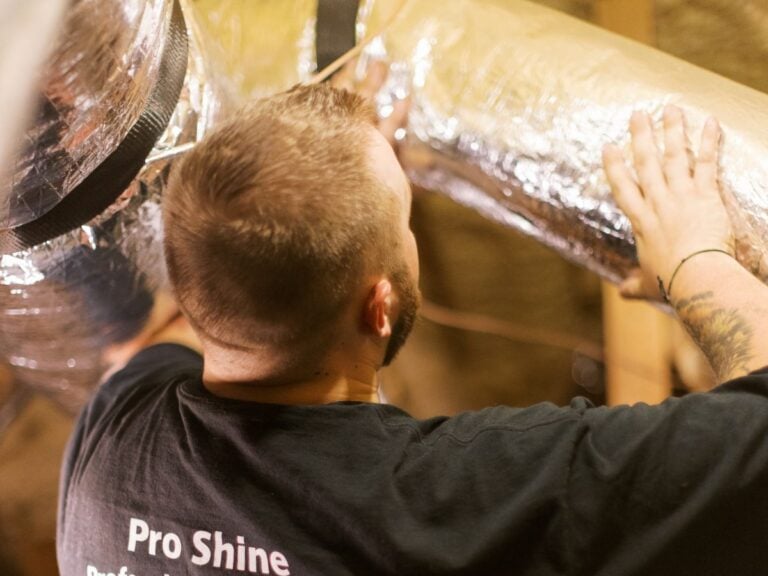
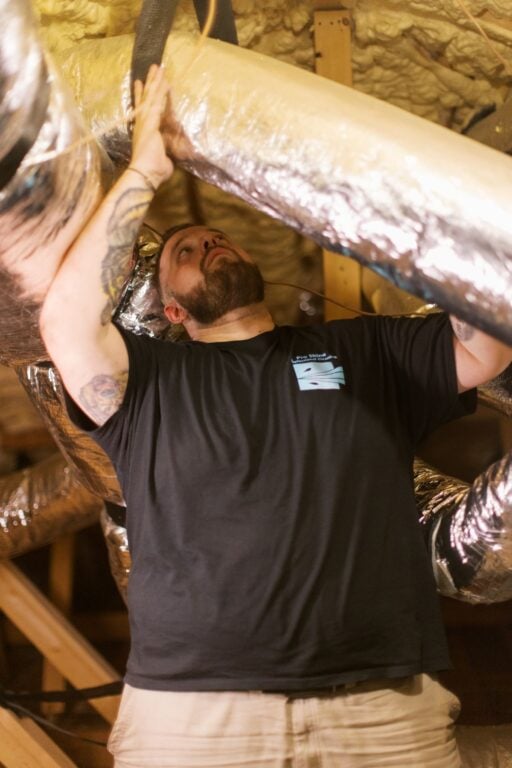
Pro Shine Professional Cleaning provides professional duct rewrapping services that restore the thermal barrier around your home’s ductwork using high-quality insulation materials designed to perform in demanding conditions. Our team inspects your full duct system, identifies every area of degraded or missing insulation, and completes the rewrapping process with the care and precision that a critical home system deserves. If your home has not had its duct insulation evaluated in the past several years, contact us today to schedule an inspection and find out exactly what your duct system needs to perform the way it should.
Clean Air Is Just A Call Away!