Commercial Air Vent Cleaning: 8 Reasons Businesses Need It
The air circulating through your business affects everything from how your employees feel to how your customers perceive your space. Commercial air vent cleaning is one of the most overlooked maintenance priorities in facilities management, yet it has a direct and measurable impact on employee health, HVAC efficiency, regulatory compliance, and operational costs. Businesses that stay ahead of this maintenance need gain real advantages over those that do not. Understanding how clean commercial ductwork supports a healthier, more productive environment is the first step toward protecting your investment.
In this guide, you will learn:
- How commercial air vent cleaning differs from residential duct cleaning
- 8 compelling business reasons to prioritize vent and duct cleaning on a regular schedule
- Which types of businesses benefit most and why
- What a professional commercial vent cleaning process actually involves
- How to evaluate your current HVAC maintenance schedule against industry standards
- What warning signs tell you your commercial system is overdue for cleaning
How Commercial Air Vent Cleaning Differs From Residential Cleaning

Commercial HVAC systems are fundamentally different from the systems in a private home, and the vent cleaning process reflects those differences at every stage. A typical commercial system serves a much larger and more complex space, operates for longer hours under heavier continuous load, and is subject to air quality standards and regulations that do not apply to residential properties. The scale of the ductwork, the number of air handling units involved, and the variety of contaminants introduced by different types of business activity all make commercial air vent cleaning a more involved and specialized undertaking than a standard home duct cleaning.
Businesses in Okatie and surrounding areas that rely on year-round HVAC operation face compounding challenges from local humidity, outdoor allergens, and the accelerated buildup those conditions create inside commercial duct systems. Understanding what sets commercial vent cleaning apart is essential for any facilities manager or business owner making decisions about their maintenance schedule:
- Scale and System Complexity: Commercial duct systems span thousands of square feet, serve multiple zones and floors, and often include rooftop units, dedicated exhaust systems, and specialized ventilation for kitchens, restrooms, and server rooms that require separate attention during any cleaning service.
- Occupancy and Air Volume: A commercial space typically cycles far more air per hour than a residential property due to higher occupancy density. More air movement means faster accumulation of dust, particulates, and biological contaminants throughout the duct network.
- Regulatory and Compliance Requirements: Depending on the industry, commercial facilities may be subject to indoor air quality standards set by OSHA, the EPA, or industry-specific bodies such as those governing healthcare, food service, and education. Residential properties face no equivalent regulatory framework.
- Reputational and Liability Stakes: Poor indoor air quality in a commercial setting can drive away customers, contribute to employee complaints or health claims, and in regulated industries trigger inspections or citations that affect the business’s ability to operate.
- Customized Scheduling Requirements: Unlike residential cleaning, which can typically be completed in a single visit during any convenient time, commercial air vent cleaning must often be scheduled during off-hours, weekends, or phased across multiple visits to avoid disrupting daily business operations.
8 Reasons Your Business Needs Regular Commercial Air Vent Cleaning
The case for prioritizing commercial air vent cleaning extends well beyond cleanliness for its own sake. Each of the following eight reasons represents a measurable business outcome tied directly to the condition of your ventilation system. Together, they make a compelling argument that air vent cleaning belongs in every commercial facility’s core maintenance budget.
1. Protecting Employee Health and Reducing Sick Days
The single most direct and quantifiable benefit of clean commercial air vents is the impact on the people working inside the building every day. When duct systems accumulate dust, mold spores, bacteria, and allergens over time, those contaminants are continuously distributed into occupied spaces with every HVAC cycle. Employees breathe this air for eight or more hours each day, and the cumulative exposure contributes to respiratory symptoms, allergy flare-ups, headaches, and fatigue that most businesses never trace back to the ventilation system.
- Studies on indoor air quality consistently link poor ventilation hygiene to increased employee sick day usage and reduced cognitive performance
- Buildings where HVAC maintenance is deferred have higher rates of reported respiratory complaints among occupants
- Clean air vents directly reduce the concentration of airborne irritants that trigger chronic health symptoms in sensitive employees
2. Improving HVAC Efficiency and Reducing Energy Costs
Every layer of dust and debris coating the interior walls of a commercial duct system acts as insulation against the airflow your HVAC is designed to deliver. As buildup accumulates, the system must work harder to push conditioned air through increasingly restricted passages, consuming more energy per hour of operation to achieve the same output. For a commercial system running eight to sixteen hours daily, this efficiency loss translates into meaningful increases in monthly utility costs.
Clean commercial air vents allow your HVAC system to operate at its designed efficiency level, which can reduce energy consumption by a measurable percentage and extend the operational lifespan of mechanical components that wear out faster under the strain of restricted airflow.
3. Extending the Lifespan of Commercial HVAC Equipment

Commercial HVAC systems represent a significant capital investment, and the decisions made about their maintenance directly determine how long that investment performs before requiring costly repair or replacement. Dirty air vents restrict airflow and force air handling units, compressors, coils, and fans to operate under elevated strain and temperature conditions that accelerate component wear.
- Clogged evaporator coils, a direct consequence of dirty duct systems, are among the most common causes of commercial HVAC failure
- Restricted airflow increases operating temperatures throughout the mechanical system, shortening the lifespan of motors, belts, and bearings
- Regular commercial air vent cleaning reduces the frequency and cost of reactive maintenance calls by keeping the entire system operating within its design parameters
4. Meeting Indoor Air Quality Standards and Regulatory Requirements
Businesses in regulated industries have non-negotiable obligations around indoor air quality that make commercial air vent cleaning not just a good practice but a compliance requirement. Healthcare facilities, restaurants, schools, and childcare centers all operate under standards that require demonstrable attention to ventilation hygiene. Even in industries without specific duct cleaning mandates, OSHA’s General Duty Clause requires employers to provide a workplace free from recognized hazards, which courts have applied to indoor air quality situations.
Maintaining a documented commercial air vent cleaning schedule provides businesses with a defensible record of proactive maintenance that protects against liability in the event of an employee health complaint or regulatory inspection.
5. Eliminating Mold and Bacteria Before They Spread
Commercial HVAC systems are particularly susceptible to mold and bacterial growth because they move large volumes of air through extensive duct networks that include numerous areas of potential moisture accumulation. Cooling coils, drain pans, and sections of ductwork near exterior air intakes create the conditions mold needs to establish itself, and once present, the HVAC system becomes the primary vehicle for distributing mold spores throughout every occupied area of the building.
In Okatie and surrounding areas, where high ambient humidity accelerates moisture buildup inside commercial duct systems, the risk of mold establishing itself in an infrequently cleaned commercial vent system is particularly pronounced. Professional commercial air vent cleaning identifies and removes mold colonies before they reach a scale that requires full remediation, which is substantially more expensive and disruptive than preventive cleaning.
6. Improving the Customer and Client Experience
The air quality and perceived cleanliness of a commercial space directly influences how customers, clients, and visitors experience your business. A musty smell, visible dust around air vents, or air that feels stale or heavy sends an immediate negative signal that no amount of surface cleaning can fully counteract. In customer-facing industries including retail, hospitality, healthcare, and professional services, the sensory experience of walking into a space matters enormously to first impressions and repeat business.
Clean air vents contribute to a space that smells fresh, feels comfortable, and projects the level of professional attention to detail that builds trust with the people your business depends on.
7. Reducing Fire Risk in Commercial Environments
Certain commercial environments face elevated fire risk from duct system contamination that most business owners do not fully appreciate. Restaurant and food service kitchens accumulate grease in exhaust ductwork at a rate that creates a genuine and serious fire hazard without regular professional cleaning. Woodworking shops, textile businesses, and manufacturing facilities that produce significant airborne particulates face similar risks from combustible dust accumulation inside their ventilation systems.
Even in standard office environments, accumulated dust in electrical rooms and near mechanical components represents an ignition risk that regular commercial air vent cleaning helps manage. NFPA standards specifically address duct hygiene requirements for commercial kitchens and other high-risk environments because the consequences of neglect in these settings are severe.
8. Supporting a Post-Renovation or Post-Construction Clean Start
Commercial spaces that have undergone renovation, remodeling, or new construction carry an especially heavy burden of contaminants in their ductwork. Drywall dust, concrete particulates, wood shavings, adhesive fumes, and insulation fibers generated during construction work enter the duct system through open vents and registers and settle throughout the entire network. Running the HVAC system before performing a thorough post-construction commercial air vent cleaning distributes all of that construction debris into the occupied space.
Any commercial facility that has recently completed renovation work, regardless of scale, should treat a professional commercial air vent cleaning as a non-negotiable step before full occupancy resumes.
Which Types of Businesses Benefit Most From Regular Vent Cleaning

While every commercial facility with a duct-based HVAC system benefits from regular air vent cleaning, certain business types face heightened need due to the nature of their operations, the populations they serve, or the regulatory environment they operate in.
- Healthcare and Medical Facilities: Hospitals, clinics, dental offices, and long-term care facilities serve populations with compromised immune systems and elevated sensitivity to airborne pathogens. These environments require the highest standard of indoor air quality maintenance, and commercial air vent cleaning is a foundational component of infection control in any healthcare setting. Contaminated ductwork in a healthcare facility can contribute to healthcare-associated infections, which carry serious liability and reputational consequences.
- Restaurants and Food Service Operations: Grease-laden exhaust from commercial cooking equipment accumulates in kitchen ductwork at a rate that no other commercial environment matches. NFPA 96 establishes specific inspection and cleaning frequency requirements for commercial kitchen exhaust systems based on cooking volume, and compliance with these standards is essential for passing health inspections and maintaining fire insurance coverage.
- Office Buildings and Corporate Facilities: High-density office environments cycle significant volumes of air through their HVAC systems continuously throughout the business day. With dozens or hundreds of employees sharing recirculated air, the concentration of biological contaminants, airborne particles, and volatile organic compounds in a poorly maintained office duct system can reach levels that measurably affect cognitive performance and employee wellbeing.
- Schools and Educational Facilities: Children are more susceptible to the health effects of poor indoor air quality than adults, and the high-occupancy, high-activity environment of a school generates substantial airborne particulate load on the ventilation system. Schools also face extended periods of closure during which HVAC systems may run in reduced modes that allow moisture to accumulate, making thorough air vent cleaning at the start of each academic year a sound maintenance practice.
- Retail and Hospitality Businesses: For any business that competes on customer experience, the sensory environment of the physical space matters enormously. Retail stores, hotels, and restaurants in Okatie and surrounding areas that invest in regular commercial air vent cleaning maintain a consistent atmosphere of freshness and comfort that customers notice and return for, even if they cannot specifically identify what makes the space feel welcoming.
What a Professional Commercial Air Vent Cleaning Process Involves
Understanding what a thorough commercial air vent cleaning service actually looks like helps business owners evaluate proposals, set expectations with vendors, and recognize the difference between a comprehensive cleaning and a superficial one.
Pre-Service Inspection and System Assessment
A qualified commercial air vent cleaning provider begins with a detailed inspection of the entire duct system, including the air handling units, supply and return ductwork, diffusers, registers, coils, and drain pans. This assessment identifies areas of significant buildup, mold presence, damaged duct sections, and any access limitations that will affect the cleaning approach. It also establishes a documented baseline condition that allows for accurate before-and-after comparison.
Commercial-Grade Equipment and Negative Pressure Cleaning
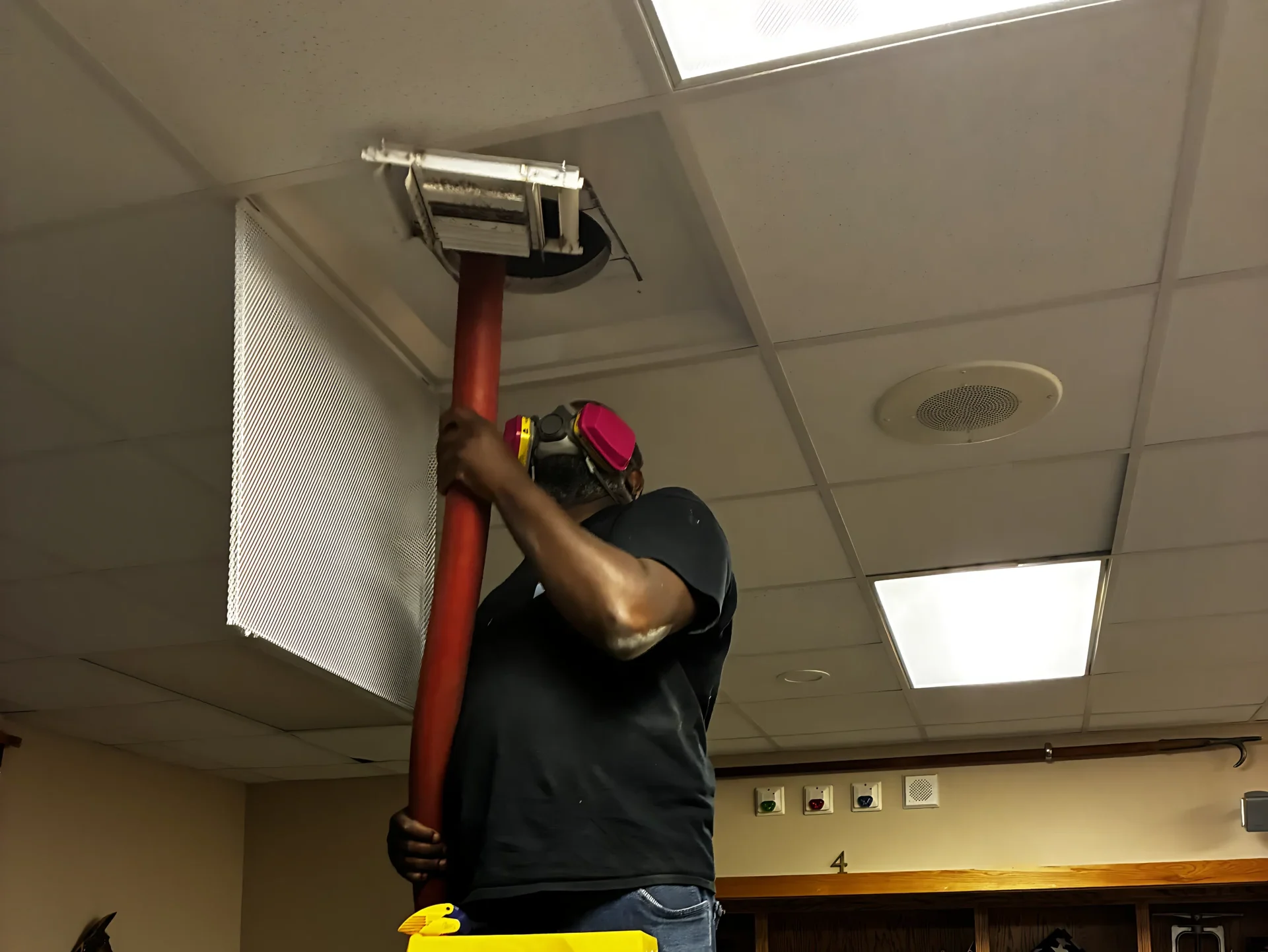
Commercial duct cleaning requires equipment capable of handling the scale and complexity of a large HVAC system. Professional providers use truck-mounted or high-capacity portable vacuum systems that create controlled negative pressure throughout the duct network, ensuring that dislodged debris travels toward the collection equipment rather than into occupied spaces. Powered rotary brushes, compressed air whips, and specialized access tools allow technicians to reach and clean the full length of every duct section.
Post-Cleaning Documentation and Follow-Up
A reputable commercial air vent cleaning provider delivers written documentation of the service performed, including the areas cleaned, any damage or deficiencies identified during the process, and recommendations for follow-up maintenance or repairs. This documentation is valuable for compliance records, insurance purposes, and for establishing a maintenance history that protects the business in the event of a future air quality complaint or inspection.
Clean Air Is a Business Decision, Not Just a Maintenance Task
For businesses in Okatie and surrounding areas, maintaining clean commercial air vents is not a background operational detail. It is a decision that affects the health and productivity of every person inside the building, the efficiency and longevity of a major capital asset, the experience of every customer who walks through the door, and the regulatory standing of the business itself. Every month a commercial vent system goes without proper cleaning is another month of compounding buildup, elevated energy costs, and increasing risk.
Pro Shine Professional Cleaning partners with businesses throughout the region to deliver commercial air vent cleaning that is thorough, professionally documented, and scheduled around the needs of the operation rather than the convenience of the provider. Our certified technicians bring the equipment, the expertise, and the commitment to transparency that every commercial client deserves. Whether you are establishing a new maintenance schedule or addressing a system that has been neglected for years, contact us today and let our team assess your facility and build a plan that keeps your business breathing clean.


Clean Air Is Just A Call Away!