
Who Cleans Air Ducts? 6 Signs You Need a Real Professional
Not everyone who offers to clean your air ducts is qualified to do the job correctly, and the gap between a provider who goes through the motions and one who actually cleans a duct system to a professional standard is significant. Knowing who cleans air ducts at the level your home actually requires is not a minor detail. It determines whether the money you spend produces real results. Understanding what a thorough, properly executed duct cleaning looks like is where making that distinction starts.
In this guide, you will learn:
- What separates a qualified air duct cleaning professional from a provider who is simply offering the service
- 7 specific signs that your home needs a real professional to clean its air ducts right now
- The credentials, equipment, and process standards that define professional-quality duct cleaning
- The types of providers homeowners commonly confuse with duct cleaning specialists
- How to verify a provider’s qualifications before booking rather than after the visit
- What you should expect to walk away with after a properly completed professional cleaning
The Difference Between Someone Who Cleans Air Ducts and Someone Who Does It Right
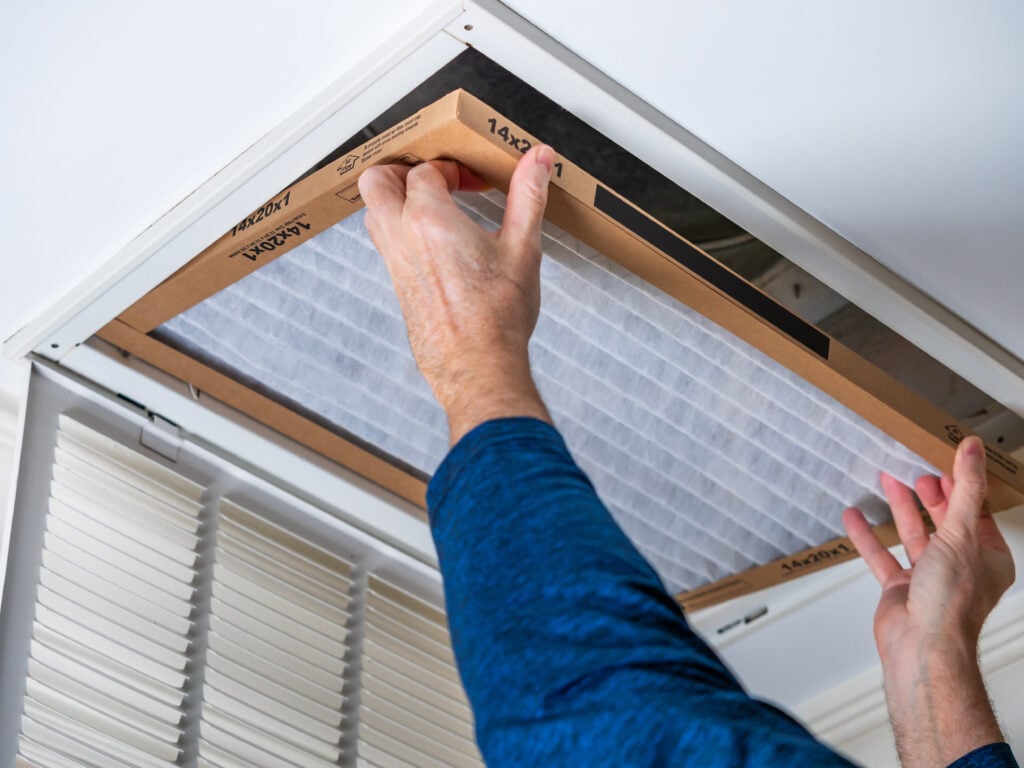
The air duct cleaning industry has a well-documented quality problem. On one end, you have NADCA-certified professionals operating with high-capacity vacuum systems, inspection cameras, and a defined process standard that covers the full duct network including the air handler. On the other end, you have low-cost providers who offer whole-home duct cleaning for fees that do not cover the time or equipment required to actually perform that scope of work. The homeowner who cannot tell these two categories apart has no reliable way to know which one they hired until after the job is complete.
In Okatie and surrounding areas, where high humidity and year-round HVAC use create consistent and significant duct buildup, the consequences of hiring a provider who performs a cosmetic cleaning while leaving the bulk of the system contaminated are real and ongoing. The duct system continues distributing allergens, mold spores, and fine particulates with every HVAC cycle, and the homeowner operates under the mistaken belief that the problem has been addressed. Understanding what qualifies someone to clean air ducts at a professional standard is what allows you to make a hiring decision you will not regret.
- Certification Is a Meaningful Differentiator: NADCA certification requires technicians to pass testing against the industry’s cleaning standard and to demonstrate ongoing education to maintain certification. It is not the only indicator of quality, but its presence is a meaningful signal and its absence is worth noting.
- Equipment Capacity Determines Whether the Job Is Physically Possible: Source-removal cleaning requires high-powered vacuum equipment that creates genuine negative pressure throughout the duct network. A provider without this equipment cannot deliver a thorough cleaning regardless of their intention or experience level.
- Process Compliance Separates Maintenance From Marketing: A professional cleaning follows a defined sequence: inspection before cleaning, negative pressure setup, mechanical agitation of all duct sections, air handler component cleaning, post-cleaning verification, and written documentation. Any provider who skips significant elements of this sequence is delivering a partial service.
- Documentation Provides Accountability: A professional who cannot produce before-and-after camera documentation and a written service report has not given you any way to verify that the work was done to the standard described. Documentation is not optional for accountable work.
- Specialization Matters in Ways That Are Not Obvious: An HVAC technician who also offers duct cleaning and a company whose primary business is duct cleaning may both be capable of high-quality work, but they may also have very different equipment, process standards, and levels of focused expertise. The specialization question is worth asking directly.
6 Signs You Need a Real Professional to Clean Your Air Ducts
The question ofwho cleans air ducts is only meaningful in the context of knowing when a professional cleaning is genuinely needed. These seven signs provide a concrete framework for making that determination based on your home’s actual conditions rather than a generic schedule recommendation.
1. You Have No Record of When the Ducts Were Last Professionally Cleaned
If you cannot find documentation of a prior professional duct cleaning, whether because you are new to the home, because the records were not kept, or because you genuinely cannot remember when the last service was, a cleaning is warranted. A system without a known cleaning history should be treated as an uncleaned system regardless of how old the home is or how clean the visible registers appear.
This situation is particularly common in homes that have changed ownership. The previous residents may have had pets, smokers, or renovation work done without scheduling a cleaning, and that history is entirely invisible to a new owner without service records or a pre-purchase inspection that specifically included duct condition assessment.
- Request any available HVAC maintenance records from the previous owner during the home purchase process, and specifically ask whether duct cleaning was ever performed and when
- If records are unavailable, schedule a camera inspection of the duct interior before committing to a full cleaning to establish what the current condition actually is
- A cleaning history document kept with home maintenance records is valuable at resale and should be started with the current cleaning if prior records do not exist
2. Visible Mold, Dark Staining, or Musty Odors From Your Vents
Visible contamination around supply registers and musty odors that worsen when the HVAC runs are among the clearest and most urgent indicators that professional duct cleaning is needed. Dark staining on or around vent covers indicates that debris inside the duct is being carried to the register face with exhaust air. A musty or dirty smell that accompanies the heated or cooled air is characteristic of biological contamination in the duct system actively being distributed through the home.
These signs call for a professional who can both clean the mechanical debris from the duct surfaces and assess whether biological contamination requires antimicrobial treatment in addition to physical cleaning. A provider who addresses one without the other will not fully resolve the problem, and a provider who recommends chemical treatment without first assessing whether mold is actually present is not applying professional judgment to the situation.
- Mold presence in a duct system should be confirmed by camera inspection before any treatment is applied, not inferred from odor alone
- The source of the moisture that allowed mold to grow should be identified and corrected as part of the cleaning scope. Treating the mold without addressing the moisture source produces temporary results
- In Okatie and surrounding areas, where ambient humidity creates persistently favorable conditions for mold inside duct systems, mold-related duct cleaning situations are more common than in drier regions and require particularly thorough follow-up
3. You Have Recently Completed a Home Renovation or Construction Project
Any renovation that involved cutting drywall, sanding floors, demo work, or construction activity near the duct system introduced significant quantities of fine particulates into the duct network through open or nearby registers. Construction debris in a duct system includes drywall dust, wood fiber, insulation particles, and silica-containing materials that distribute throughout the home with every subsequent HVAC cycle.
Post-renovation duct cleaning is recommended by most HVAC industry organizations as a standard step before resuming normal system operation. The scope of the recommendation is proportional to the scale of the renovation. A full gut-and-remodel warrants a thorough professional cleaning. A bathroom tile replacement may not, depending on whether the work occurred near any duct openings. A professional assessment is the appropriate starting point when the extent of contamination is unclear.
- Even renovations that were carefully contained behind plastic sheeting introduce some construction particulates into the duct system, because return air intakes are rarely sealed during renovation work
- Post-renovation cleaning should address the air handler components as well as the duct runs, since construction particulates that reach the return air stream pass directly through the air handler on their way to the supply ducts
- If a renovation is planned rather than completed, discuss duct protection measures with the contractor before work begins to reduce the cleaning scope required afterward
4. Family Members Have Worsening Allergy or Respiratory Symptoms Indoors

When household members notice that allergy symptoms, morning congestion, eye irritation, or respiratory discomfort are meaningfully worse at home than away from home, or that symptoms that had been managed successfully now seem to have escalated for no identifiable external reason, the duct system is worth investigating as a potential source. Duct contamination that recirculates allergens continuously with every HVAC cycle produces a consistent and persistent exposure that individual room air cleaners cannot fully offset.
This indicator is particularly significant when the worsening corresponds with the start of a heating or cooling season, when the HVAC system begins operating more frequently and recirculating a larger volume of duct air per day. The seasonal timing of a symptom worsening that tracks with increased HVAC use is one of the more direct clinical signals that the duct system is contributing to the problem.
- Ask household members to track when symptoms are worst relative to time spent at home, which rooms they are in, and whether symptoms improve on days when windows are open versus when the HVAC is the primary air source
- Children, elderly family members, and anyone with asthma or diagnosed respiratory conditions are more sensitive to duct contamination and may show symptoms earlier and more severely than other household members
- A professional cleaning followed by improved filter maintenance and a filter upgrade can produce measurable symptom improvement within days in households where duct contamination is the primary indoor allergen source
5. Your HVAC System Is Running Longer Cycles or Energy Bills Are Rising
If your heating or cooling system is running noticeably longer to reach the thermostat setting, or if your energy bills have increased gradually without a corresponding change in thermostat settings or outdoor temperature patterns, reduced airflow from a contaminated duct system is one of the most likely contributing factors. Accumulated debris on duct walls, a heavily loaded filter, and buildup on the evaporator coil all restrict the airflow the system needs to deliver conditioned air efficiently.
A professional cleaning that addresses all of these components, including the duct runs and the air handler, can produce a measurable reduction in HVAC runtime and a corresponding reduction in energy costs. This efficiency improvement is one of the more concrete financial returns on a professional duct cleaning investment and is worth quantifying over the months following a cleaning by comparing utility bills against the same period in prior years.
- Estimate the potential efficiency gain before the cleaning by noting the system’s current runtime per day and comparing to the manufacturer’s expected performance for your system size and home conditions
- The evaporator coil is frequently a larger contributor to airflow restriction than the duct system itself. A cleaning that addresses only the ducts without including coil cleaning may produce less efficiency improvement than one that addresses both
- If efficiency does not improve after a thorough cleaning, the cause of the extended runtime may be a refrigerant or mechanical equipment issue rather than duct contamination, and an HVAC technician should assess the system
6. You Have Pets or a High-Occupancy Household With Heavy HVAC Use
Standard duct cleaning recommendations typically cite a three-to-five-year interval for average households. That interval is not appropriate for homes with one or more pets, households with four or more occupants, or homes where the HVAC system runs continuously for ten or more months of the year. Each of these factors accelerates the rate of debris accumulation inside the duct system significantly relative to the assumptions underlying a standard cleaning interval recommendation.
Pet dander is microscopic, highly adhesive, and produced continuously regardless of how frequently the pet is groomed or the home is cleaned. It enters the return air stream with every HVAC cycle and coats duct interior surfaces at a rate that makes annual cleaning a more appropriate target for most pet-owning households than the standard three-to-five-year recommendation. In Okatie and surrounding areas, where families often have multiple pets and run HVAC systems year-round, a one-to-two-year cleaning interval reflects the actual accumulation rate more accurately than the national average guideline.
- Single-pet households may reasonably target a two-to-three-year cleaning interval, while multi-pet households should plan for annual cleaning in most cases
- Households with known allergy sufferers, regardless of pet ownership, should use the allergy symptom management goal rather than the standard cleaning interval as their primary scheduling guide
- High-occupancy households including multigenerational families, home-based businesses, or childcare settings introduce more particulates per square foot of conditioned space and benefit from more frequent attention to duct cleanliness
What Qualifies Someone to Clean Air Ducts Professionally
Knowing what indicators of professional qualification to look for gives you a concrete checklist to apply before booking rather than after a disappointing visit. None of these qualifications are difficult to verify in advance, and any credible provider should be able to speak to all of them directly.
- NADCA Membership and ASCS Certification: The National Air Duct Cleaners Association certifies Air System Cleaning Specialists against the ACR standard for HVAC system cleaning. Membership can be verified through the NADCA member directory and is the most widely recognized professional credential in the duct cleaning field.
- High-Capacity Vacuum Equipment: Ask specifically about the type and capacity of vacuum equipment the provider uses. Truck-mounted or large-capacity portable vacuum systems capable of generating substantial negative pressure throughout the duct network are required for source-removal cleaning. Shop vacuums are not.
- Camera Inspection Before and After: A credible professional uses a camera tool to assess duct interior condition before cleaning and to verify cleanliness after. This capability is not optional for accountable work and should be included in the standard service.
- Full-System Scope Including Air Handler: Any provider who describes a cleaning scope limited to the duct runs without addressing the air handler, blower, coil, and return side is offering an incomplete scope that will re-contaminate the supply side quickly after cleaning.
- Written Service Report as a Standard Deliverable: A written record of the pre-cleaning findings, scope performed, any damage or concerns identified, and post-cleaning verification results should be a standard part of the service deliverable, not an optional upgrade.
- State Contractor Licensing Where Required: Some states require an HVAC contractor license for duct cleaning work. Confirm whether your state has this requirement and ask the provider whether they hold the appropriate license before scheduling.
The Providers Homeowners Commonly Confuse With Duct Cleaning Professionals
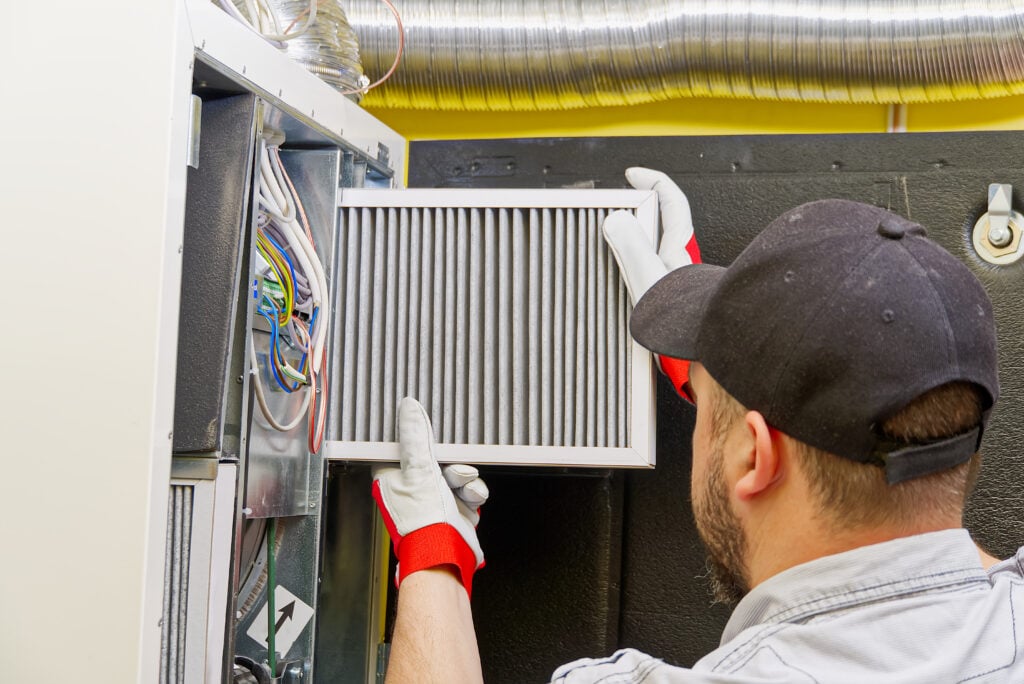
Part of answering who cleans air ducts is clarifying who does not, even when those providers offer the service. This confusion is one of the most common reasons homeowners end up with cleanings that do not deliver the results they expected.
HVAC Maintenance Technicians
An HVAC technician who services and repairs heating and cooling equipment is trained in mechanical system diagnostics, refrigerant handling, and equipment repair. Some HVAC companies also offer duct cleaning as a bundled or add-on service, and some of those offerings are performed to a professional standard. Others use the duct cleaning addition as a revenue supplement while performing only a superficial cleaning with inadequate equipment. The provider’s HVAC license speaks to their mechanical qualifications, not to their duct cleaning standard.
Carpet Cleaning Companies That Also Offer Duct Cleaning
Carpet cleaning and duct cleaning are distinct trades that require entirely different equipment and training. A carpet cleaning company that offers duct cleaning as an upsell typically uses portable vacuum equipment designed for extraction work rather than the high-capacity suction systems required for effective duct source-removal cleaning. The convenience of bundling services does not compensate for the capability gap in the equipment being used.
General Handymen and Maintenance Services
A general handyman may offer to clean dryer vents, clean accessible register faces, and vacuum the visible portions of ductwork. This type of accessible surface cleaning is not a duct cleaning in any meaningful sense and should not be represented as one. The contamination that affects indoor air quality lives deep in the duct interior and on the mechanical components connected to it, not at the register face where a shop vacuum can reach.
A Quick-Reference Provider Comparison
| Provider Type | Has Duct-Specific Equipment? | Follows Defined Cleaning Process? | Provides Documentation? | Appropriate For Duct Cleaning? |
| NADCA-certified duct specialist | Yes | Yes | Yes | Yes |
| HVAC technician offering cleaning | Sometimes | Sometimes | Sometimes | Evaluate individually |
| Carpet cleaner with duct add-on | Rarely | Rarely | Rarely | Not recommended |
| General handyman | No | No | No | No |
Hire Someone Who Can Actually Prove the Job Was Done
The question of who cleans air ducts is ultimately a question of accountability. Any provider can claim the service was completed. A real professional can show you the camera footage before and after, walk you through what was found, hand you a written report, and stand behind the quality of the work with documentation you can keep. That is the standard worth insisting on, and in Okatie and surrounding areas, it is the standard that Pro Shine Professional Cleaning applies to every cleaning we perform.
If you are not sure whether your home needs a professional cleaning, or if you want to verify that a prior cleaning was done to the standard your system deserved, contact us today and let our team assess your system, show you what we find, and give you a clear, honest recommendation for next steps.

Clean Air Is Just A Call Away!