Air Cleaner for Allergies: 6 Features That Actually Help
If allergies are disrupting your daily life at home, an air cleaner can be one of the most effective tools for reducing your exposure to the triggers that cause symptoms. But not all devices perform equally, and the features that separate an effective air cleaner for allergies from an expensive piece of furniture are specific and measurable. Pairing the right device with a genuinely clean air distribution system throughout your home is the combination that produces lasting allergy relief rather than marginal improvement.
In this guide, you will learn:
- Why some air cleaners actually help allergy sufferers while others produce little measurable benefit
- 6 specific features that determine whether an air cleaner is genuinely effective for allergies
- What air cleaners cannot address on their own and why whole-home air quality requires more than a device
- How to position and use an air cleaner for maximum benefit in your specific living situation
- The allergy triggers most commonly found in residential air and which of them air cleaners handle best
- How to evaluate product marketing claims against the specifications that actually matter
Why Most Allergy Sufferers Are Not Getting the Most From Their Air Cleaner
The air cleaner category is one of the most heavily marketed product segments in the home environment space, and the gap between what manufacturers claim and what devices actually deliver can be significant. Many air cleaners sold at accessible price points use marketing language that implies HEPA-level performance while technically not meeting the standard that term requires. Others are sized for spaces far smaller than the room they are placed in, which means they are cycling the air too infrequently to meaningfully reduce allergen concentration during a typical exposure period.
In Spring Island and surrounding areas, where pollen seasons are long and intense, where coastal humidity supports dust mite populations year-round, and where mold spores in the ambient air create a persistent background allergen load, an air cleaner that is not genuinely up to the task provides false reassurance rather than real relief. Understanding what features actually matter is what allows allergy sufferers to make a purchasing decision that changes how they feel at home rather than one that simply decorates the bedroom.
- True Allergen Capture Requires True HEPA: Only devices that carry the genuine HEPA certification, meaning they capture 99.97 percent of particles at 0.3 microns, will reliably remove the particle sizes responsible for most allergy symptoms, including pollen, pet dander, dust mite debris, and mold spores. Devices marketed as “HEPA-type” or “HEPA-style” do not meet this threshold.
- Room Coverage Is Not Optional Information: An air cleaner rated for 150 square feet in a 400-square-foot living room is not providing adequate protection. The device is cycling the air in the room too infrequently to meaningfully reduce allergen concentration, regardless of how good the filter technology is.
- Allergy Relief Requires Continuous Operation: A device that is only effective when running on its highest setting, which is often too loud for comfortable daily use, is not a practical allergy tool. Continuous operation on a lower setting produces better results over time than intermittent high-speed cycles.
- Chemical Irritants Are a Separate Problem: Many allergy sufferers react not only to particulate allergens like pollen and dander but also to volatile organic compounds, cooking odors, and chemical off-gassing from building materials and cleaning products. A device with only particulate filtration does not address this component of indoor air quality.
- Placement and Room Configuration Affect Outcome: Even the best-performing air cleaner placed in a corner, blocked by furniture, or in the wrong room for the household’s primary allergen exposure points will underperform relative to its specifications. How a device is used matters as much as what device is purchased.
6 Features That Actually Help When Choosing an Air Cleaner for Allergies
These six features distinguish air cleaners that produce meaningful symptom relief for allergy sufferers from those that offer the appearance of air quality improvement without the measurable results. Evaluate any device against this list before purchasing rather than relying on brand reputation or price as proxies for performance.
1. True HEPA Filtration Certified to the 99.97 Percent Standard
The most important technical specification in any air cleaner marketed for allergy use is genuine HEPA filtration. The HEPA standard requires that the filter capture 99.97 percent of airborne particles at the most-penetrating particle size of 0.3 microns. This standard is directly relevant to allergy sufferers because pollen grains (typically 10 to 100 microns), pet dander (typically 2.5 to 10 microns), dust mite debris (typically 1 to 10 microns), and mold spores (typically 2 to 10 microns) all fall within the size range that a true HEPA filter reliably captures.
The distinction between true HEPA and HEPA-adjacent marketing language is significant and measurable. A filter rated at 99 percent efficiency or described as HEPA-like may allow several times more allergenic particles to pass through per unit of air filtered than a certified true HEPA device. For a mild allergy sufferer this difference may be manageable, but for someone with significant sensitivity it is the difference between meaningful symptom relief and continued daily discomfort.
- Look for devices that explicitly state “true HEPA” or “H13 HEPA” on the product specification sheet, not just in the product name or marketing copy
- The HEPA filter should be replaceable and the replacement schedule should be clearly specified. Filters that cannot be replaced or that have no specified replacement interval are not adequate for long-term use
- Some devices use “permanent” or “washable” HEPA filters. These typically perform below the true HEPA standard after washing and should be evaluated with skepticism for allergy use
2. A Clean Air Delivery Rate Matched to Your Room Size
Clean Air Delivery Rate (CADR) is the most standardized and useful measure of an air cleaner’s actual cleaning capacity for a specific room. It measures how quickly the device can deliver a volume of cleaned air to a space, expressed in cubic feet per minute for specific particle types including pollen, dust, and smoke. A higher CADR rating means the device can adequately clean a larger space or clean a given space more frequently per hour.
The Association of Home Appliance Manufacturers recommends matching a device to a room where the CADR rating is at least two-thirds of the room’s square footage. A 300-square-foot bedroom would ideally have a device with a CADR of at least 200 for pollen and dust. Industry guidance for allergy sufferers specifically recommends achieving at least four to five air changes per hour in the primary rooms where exposure occurs.
- CADR is independently verified and more reliable than manufacturer-provided square footage coverage estimates, which are sometimes calculated at minimal air change rates that are inadequate for allergy management
- Buy slightly above the minimum CADR for your room size to allow the device to operate on a lower, quieter speed setting while still achieving the necessary air change rate for effective allergen removal
- In Spring Island and surrounding areas, where mold spores from the high-humidity outdoor environment are a significant indoor allergen source, prioritizing a CADR rating for mold spores alongside pollen and dust is particularly relevant to the local allergen profile
3. An Activated Carbon Layer for Gases, Odors, and VOCs
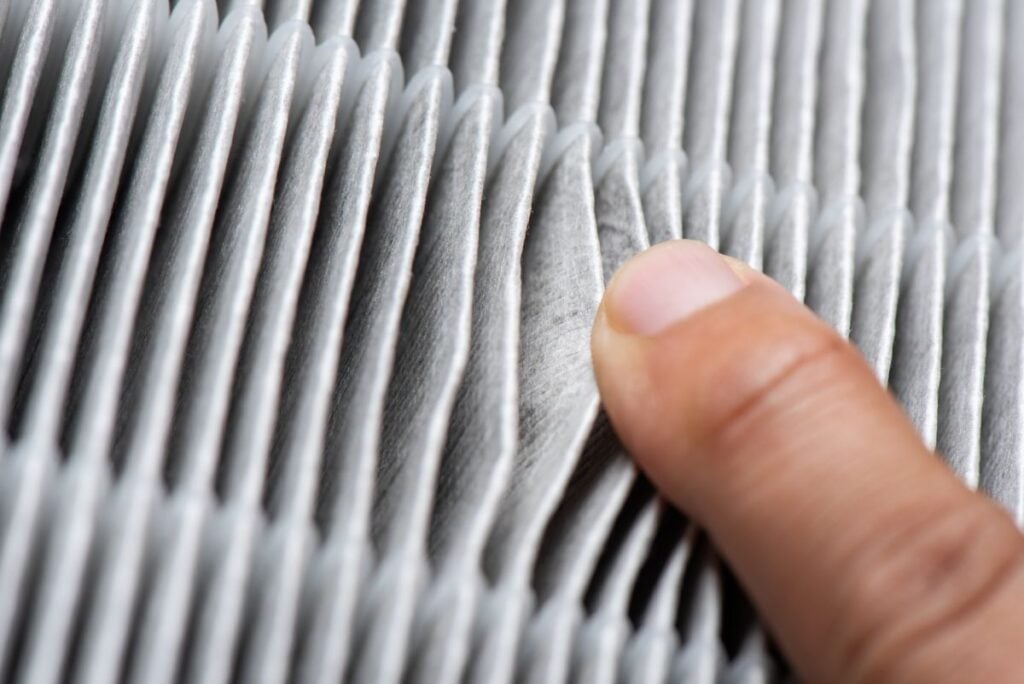
A true HEPA filter is highly effective at capturing particulate allergens but does not address the gaseous and chemical components of indoor air that also trigger reactions in sensitive individuals. Volatile organic compounds emitted from building materials, furniture, cleaning products, and personal care items are not particles and pass through HEPA filtration unimpeded. An activated carbon layer in combination with the HEPA filter addresses this second category of indoor air pollutants.
For allergy and asthma sufferers whose symptoms include sensitivity to chemical odors, cleaning product fumes, or cooking vapors, a device with both true HEPA and a substantial activated carbon stage addresses the full spectrum of their primary indoor triggers. The carbon layer also extends the perceived freshness of the air in a treated space, which contributes to the subjective sense of cleaner air that makes continuous device operation more comfortable.
- The effectiveness of activated carbon filtration depends on the volume of carbon used. Thin carbon filter sheets provide minimal capacity compared to granulated carbon beds or thick carbon blocks
- Activated carbon saturates over time and must be replaced. Devices with very thin carbon layers may need carbon replacement more frequently than the HEPA filter, and the cost of carbon replacement should factor into the total cost of ownership
- Carbon filtration is particularly relevant in homes with gas appliances, new furniture or flooring, or any household member who is sensitive to chemical odors in addition to particle allergens
4. An Automatic Sensor Mode That Responds to Real-Time Air Quality
Manual-only air cleaners that require the user to remember to run them at appropriate speeds are consistently less effective than devices with air quality sensors that automatically increase fan speed when allergen or particulate levels rise and return to lower speeds when the air is clean. Sensor-based auto modes take the decision out of the user’s hands and ensure the device is always operating at the level the current air quality actually requires.
Automatic sensor modes are particularly valuable for allergy management because many of the events that spike indoor allergen levels, including opening windows during high-pollen periods, someone entering the home from outdoors, cooking activities, or pet movement, happen throughout the day in ways that a manually set fan speed cannot anticipate. A device that detects a change and responds immediately captures the allergen spike at its peak rather than after it has distributed throughout the room.
- Look for devices with particle sensors rather than only VOC or CO2 sensors, as particle detection is more directly relevant to allergy trigger monitoring
- Some devices display a real-time air quality indicator that shows current particulate levels. This display can be useful for identifying the household activities and times of day that consistently drive allergen spikes
- Automatic mode is most useful for living spaces and bedrooms where occupancy patterns are variable. A device in a room that is occupied continuously at predictable times can reasonably be set manually
5. A Pre-Filter for Larger Particles to Protect HEPA Filter Life
True HEPA filters are significantly more expensive to replace than the coarser pre-filters that protect them. A device without a pre-filter stage sends all incoming air, including large particles like pet hair, fiber fragments, and visible dust, directly to the HEPA filter. These large particles load the filter surface rapidly, reducing its effective lifespan and increasing the frequency and cost of HEPA replacement.
A washable or replaceable pre-filter that captures particles larger than what the HEPA filter needs to address extends the interval between HEPA replacements significantly and reduces the total cost of operating the device over its lifespan. In households with pets, high traffic, or construction nearby, the pre-filter may need cleaning monthly, but this is a negligible maintenance task compared to premature HEPA filter replacement.
- Washable pre-filters should be rinsed and fully dried before reinserting to avoid introducing moisture into the device interior
- Replace the pre-filter entirely rather than washing it once it begins to show visible deterioration or once washing no longer restores its visual appearance
- The presence of a well-designed pre-filter is a practical indicator that the manufacturer has thought through the real-world cost of filter maintenance for the end user
6. Noise Level Specifications That Support Continuous Use
An air cleaner that cannot be tolerated in a bedroom or main living area because of its noise output on any setting that actually delivers performance is not a practical allergy management tool. Continuous operation on a livable setting produces significantly better allergen reduction over a 24-hour period than intermittent use at maximum speed. The most important noise specification is the decibel level on the lowest or mid-range setting, not on maximum speed.
Most air cleaners are rated in decibels at their highest fan speed. For continuous use in a sleeping area, look for devices that achieve acceptable CADR at settings rated below 40 to 45 decibels, which is comparable to the ambient sound level of a quiet room. A device rated at 60 to 65 decibels on its low setting will not realistically be used continuously overnight regardless of its filtration performance.
- Test a device at the settings you intend to use regularly before purchasing if possible, or review independently measured decibel ratings from consumer testing sources rather than relying on manufacturer specifications alone
- Sleep mode or night mode settings on some devices automatically reduce fan speed and dim indicator lights during sleeping hours, which can make it easier to leave the device running through the night without interruption
- In homes where HVAC systems run year-round, the combined ambient sound of the HVAC and the air cleaner may make a slightly louder device tolerable during the day while a quieter device remains the right choice for overnight use in sleeping areas
What Air Cleaners Cannot Do and Why Whole-Home Air Quality Requires More
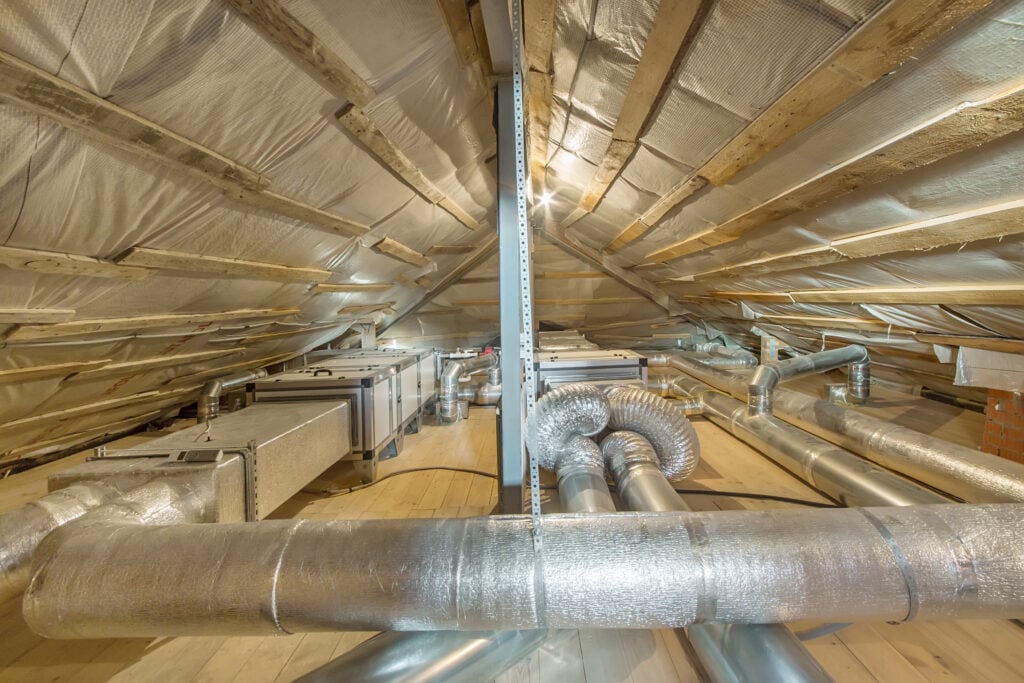
An air cleaner is a room-level intervention, not a whole-home solution. Even the best-performing device addresses only the air in the immediate room where it is placed, and only while the room’s air is circulating through the device. It does not address the allergens distributed through the home’s duct system with every HVAC cycle, the buildup of allergens in carpets and upholstery, or the re-introduction of outdoor allergens every time a door or window is opened.
- Duct System Contamination Continuously Undermines Air Cleaner Gains: A home whose HVAC system circulates pet dander, mold spores, and accumulated dust through every room with each heating or cooling cycle is working against any air cleaner placed in those rooms. The device is filtering air that the HVAC system is simultaneously re-contaminating, which limits the improvement achievable by the device alone.
- Carpets and Upholstery Are Allergen Reservoirs the Device Cannot Reach: Dust mite colonies in carpets, pet dander embedded in upholstered furniture, and mold in damp areas are not addressed by air filtration. These surfaces continuously shed allergens into the room air, creating a regenerating source that limits how clean the room air can stay regardless of filter performance.
- Multiple Devices Are Needed for Whole-Home Coverage: An air cleaner only treats the air in the room where it operates. A bedroom device does not clean the living room air, and vice versa. Allergy sufferers who spend time throughout the home need either multiple devices positioned strategically or a whole-home intervention like HVAC filtration upgrades or duct cleaning that addresses the distribution system itself.
- The HVAC Filter Is Your First Line of Defense: Upgrading the home’s central HVAC filter to a higher-MERV rating reduces the allergen load distributed by the system before it ever reaches any room, which makes air cleaners in individual rooms more effective rather than less necessary. The two approaches are most powerful when used together.
How to Position and Use Your Air Cleaner for Maximum Allergy Relief
Choosing the right device with the right features is only part of the equation. Where and how the device is used has a direct impact on how much allergen reduction it actually delivers in daily household life.
Choose the Right Room for Your Primary Exposure
The bedroom is the highest-priority room for allergy management in most households because sleep represents the longest period of continuous indoor allergen exposure without the option to step outside for relief. Placing a true HEPA air cleaner in the bedroom and running it continuously during sleeping hours addresses the most critical exposure window and is more impactful than placing the same device in a less-used room.
Position the Device for Optimal Airflow
Place the air cleaner away from walls and furniture that would obstruct air intake or output. Most devices are designed to draw air from one or multiple sides and exhaust clean air from the top or front. Positioning the device in an open area of the room, elevated slightly if the design permits, allows it to circulate the room’s air more efficiently than when it is tucked into a corner or partially blocked by a nightstand.
Run the Device Continuously Rather Than Intermittently
The most common usage mistake with air cleaners for allergies is turning them on only when symptoms are already present. By that point, the allergen concentration in the room has already been elevated for long enough to trigger symptoms. Continuous operation on a moderate setting maintains lower baseline allergen levels that prevent symptom spikes rather than responding to them after the fact.
Maintain the Filters on Schedule Without Exception
A HEPA filter that has reached the end of its useful life does not degrade gracefully. As the filter surface becomes overloaded, it begins to restrict airflow through the device while providing reduced capture efficiency, which means the device is simultaneously moving less air and filtering that air less effectively. Following the manufacturer’s replacement schedule, or replacing more frequently in dusty or high-allergen environments, ensures the device always performs to specification.
Cleaner Air at Home Starts With More Than One Solution
An effective air cleaner for allergies with the six features covered in this guide is one of the highest-impact individual purchases an allergy sufferer can make for their home environment. But the most significant and lasting allergy relief comes from addressing both the air in individual rooms and the duct system that distributes air throughout the home with every HVAC cycle. Neither solution alone does what both together accomplish, and for households in Spring Island and surrounding areas where allergen loads from pollen, humidity, and coastal air quality are year-round realities, a whole-home approach is the one that actually changes how people feel every day.
Pro Shine Professional Cleaning helps homeowners throughout Spring Island and surrounding areas reduce the allergen load in their duct systems through professional air duct cleaning that removes the accumulated dust, dander, mold spores, and debris that an air cleaner in any individual room cannot reach. If you are managing allergies at home and want to understand what your duct system may be contributing to the problem, contact us today and let our team assess what is inside your system and what it will take to give your air cleaner the clean foundation it needs to perform at its best.

Clean Air Is Just A Call Away!