Dryer Fire Prevention: 9 Tips Every Homeowner Should Know
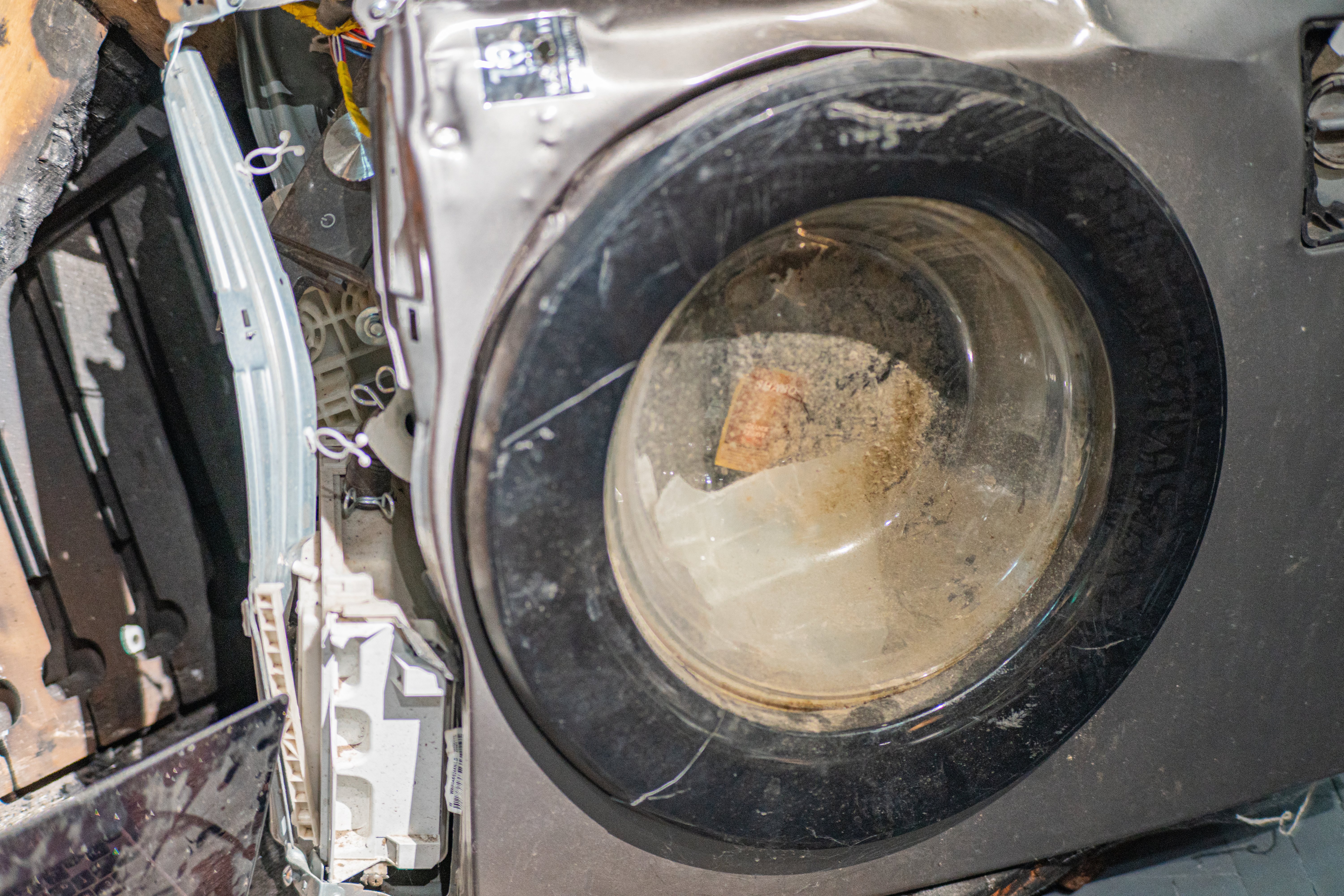
Every year, thousands of families lose their homes to fires that started in the laundry room. Understanding dryer fire prevention is not a minor maintenance concern. It is one of the most important safety habits a homeowner can build, and most of the risk factors are entirely within your control. The same commitment to keeping your home’s exhaust and ventilation systems clean and free-flowing is what stands between routine laundry and a genuine household emergency.
In this guide, you will learn:
- Why dryers are responsible for far more home fires than most people realize
- 9 actionable dryer fire prevention tips you can start applying immediately
- The most common dryer fire prevention mistakes that put homes at risk
- How to build a consistent dryer safety routine that does not slip through the cracks
- What specific household habits and appliance conditions create the highest fire risk
- When professional maintenance is the only way to address the risk adequately
Why Clothes Dryer Fires Happen and Why They Are Almost Always Preventable

The U.S. Fire Administration reports that dryers cause roughly 2,900 home fires per year, resulting in deaths, injuries, and tens of millions of dollars in property loss annually. What makes this statistic particularly significant is that the same agency identifies failure to clean as the leading cause of those fires. This is not a manufacturing defect, a faulty appliance design, or an unavoidable hazard. It is a maintenance problem, which means it is a preventable one.
In Savannah and surrounding areas, where dryers operate year-round due to a long, humid season that makes outdoor drying impractical for much of the year, the rate at which lint accumulates inside vent ducts is higher than in climates where dryers see lighter seasonal use. Homeowners who run their dryers four, five, or six loads per week accumulate the same level of duct buildup in a single year that a lighter-use household might develop over two or three. Understanding why these fires start is the foundation of understanding how to stop them.
- Lint Is the Primary Fuel: Lint is composed of fine fabric fibers that are among the most flammable household materials in existence. It ignites at temperatures that the heating element of a restricted dryer routinely reaches, and it is produced in significant quantities with every single load of laundry regardless of how diligent the homeowner is about the lint trap.
- The Vent Duct Is Where Risk Accumulates: The lint trap captures the majority of lint shed during a drying cycle, but a meaningful percentage of fine particles escapes with every load and coats the interior walls of the vent duct. This buildup accumulates over months and years into a dense, combustible layer that sits in continuous proximity to the heat exhaust from the dryer.
- Restriction Raises Temperatures to Dangerous Levels: Under normal operating conditions, a dryer exhausts heat and moisture freely through the vent duct. When that pathway is restricted by lint buildup, heat accumulates inside the appliance and duct system, raising temperatures toward the range where accumulated lint can ignite. The fire risk is directly proportional to how restricted the exhaust pathway has become.
- Most Fires Start in the Duct, Not the Drum: Contrary to what many homeowners assume, the majority of dryer fires originate not inside the drum where clothes tumble but inside the vent duct where concentrated lint is exposed to sustained high exhaust temperatures during every cycle. This means the fire can start inside a wall cavity and spread to building materials before any visible flame or smoke appears in the laundry room.
- Prevention Is Cheap Compared to the Consequences: The cost of a professional dryer vent cleaning is a fraction of the cost of a homeowner’s insurance deductible, and a small fraction of the actual cost of a dryer fire in lost property, displacement, and the physical and emotional toll it takes on a household. Every prevention measure covered in this guide delivers returns that are disproportionately large compared to the time and money they require.
9 Dryer Fire Prevention Tips for Clothes Dryer Safety
These nine tips are not theoretical recommendations. They are the specific behaviors and maintenance habits that fire safety authorities, appliance manufacturers, and professional cleaning technicians consistently identify as the most effective available measures for reducing dryer fire risk in residential homes. Applying all nine consistently is what genuine dryer fire prevention looks like in practice.
1. Clean the Lint Filter Before Every Single Load
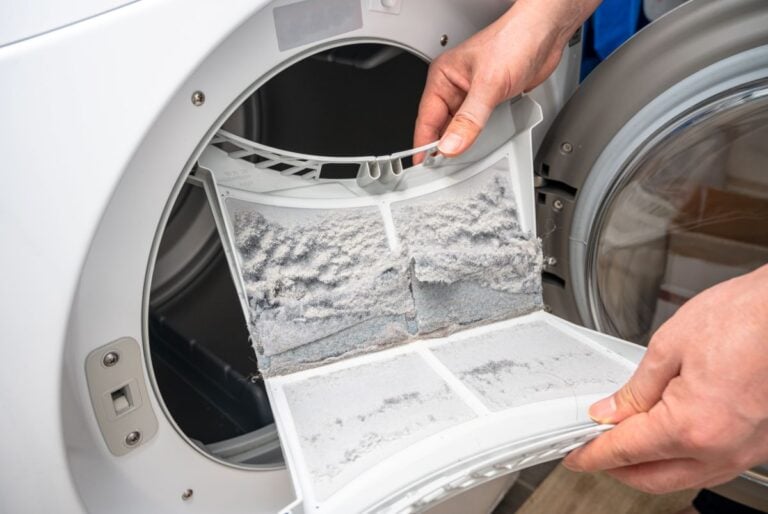
This is the most fundamental dryer fire prevention habit and the one that most homeowners already know but do not always follow consistently. A lint trap that is not cleared before a load begins operates at reduced airflow efficiency from the first minute of that cycle, and over multiple loads a packed trap can restrict airflow enough to raise internal dryer temperatures meaningfully. The habit takes less than ten seconds and should be automatic.
- Remove lint by peeling it from one end of the screen to the other rather than wiping with your hand, which tends to push fine particles through the screen mesh rather than removing them
- Dispose of removed lint immediately and never set it down on or near the dryer where heat from the appliance can reach it
- If the lint on the screen is unusually fine, grayish rather than light-colored, or does not come off in a cohesive sheet, the filter screen may have a product residue coating that requires washing
2. Clean the Lint Screen Thoroughly Every Month
Running your finger across the lint screen after clearing visible lint is not enough to keep the mesh fully open. Dryer sheet chemicals, fabric softener residue, and fine particulates build up a thin invisible film on the screen mesh over time that reduces airflow even when the trap looks clean to the naked eye. Once a month, hold the screen under warm running water. If water beads on the surface rather than passing through the mesh freely, the screen has product buildup that requires removal.
Wash the screen with a soft brush and a small amount of dish soap, rinse thoroughly, and allow it to air dry completely before reinserting. A screen that allows water to pass through freely is performing as designed. One that repels water is restricting airflow with every load, increasing internal dryer temperatures and fire risk.
3. Schedule Annual Professional Dryer Vent Cleaning
This is the single most impactful dryer fire prevention measure available to homeowners because it addresses the accumulation of lint inside the vent duct, the place where dryer fires most commonly originate. A professional cleaning reaches the full length of the vent run from the appliance connection to the exterior cap, removes the accumulated lint that consumer tools cannot fully dislodge from deeper in the duct, and confirms that the exhaust pathway is clear and the exterior cap is functioning correctly.
For households in Savannah and surrounding areas running high laundry volumes, a six-month cleaning interval may be more appropriate than an annual one. Households with pets, households with multiple family members, and homes where laundry is done daily are all situations where lint accumulates at a rate that makes annual cleaning inadequate.
- Ask for camera inspection before and after the cleaning to confirm that the full length of the duct was addressed and not just the visible register area
- Confirm that the technician checks and clears the exterior vent cap as part of the cleaning scope, not just the interior duct run
- Get a written record of the cleaning date and any observations about system condition to use as a reference for scheduling the next service

4. Replace Plastic or Foil Accordion Transition Duct with Rigid Metal
The flexible plastic or foil accordion duct that connects the back of the dryer to the wall opening is one of the most significant fire risk factors in many laundry room installations. These materials have ribbed interiors that trap lint at every fold regardless of how frequently the system is cleaned, restrict airflow when kinked or compressed, and are combustible themselves if a fire starts in the duct system.
Rigid aluminum or galvanized steel transition duct has a smooth interior that does not accumulate lint the way ribbed materials do, does not compress when the dryer is pushed close to the wall, and is non-combustible. UL-listed semi-rigid metal duct is an acceptable alternative for installations where rigid duct cannot be used due to the routing geometry. Both are direct replacements that most homeowners can install themselves or have a technician install during a professional cleaning visit.
- Check behind your dryer today. If the transition duct is white or silver plastic or a shiny foil accordion material, it should be replaced
- The maximum recommended length for a transition duct section is six feet, and it should have as few bends as possible to maintain adequate airflow
- Transition duct replacement is inexpensive and has an immediate positive effect on both fire safety and dryer efficiency
5. Reduce Carbon Monoxide Risk by Never Leaving the Clothes Dryer Running Unattended
This tip does not prevent lint from accumulating or reduce the combustion risk inherent in a restricted vent. It does, however, give you the critical advantage of early detection and response if a fire does start. A dryer fire that ignites while you are home and awake can be detected and responded to before it spreads beyond the appliance and duct. A dryer fire that starts while you are asleep or away from home has minutes to travel through duct pathways and reach combustible building materials before anyone is aware it has started.
- Program your laundry schedule so that cycles complete while you are awake and nearby rather than running overnight or while you are out
- Never start a load immediately before leaving the house for an extended period, even if the expected cycle time is shorter than your planned absence
6. Inspect and Maintain the Exterior Vent Cap Seasonally
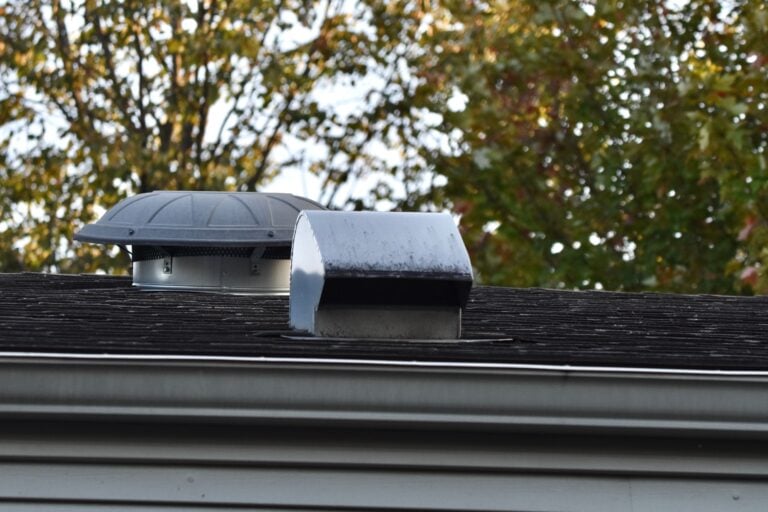
The exterior vent cap is the final point in the dryer’s exhaust pathway, and its condition directly affects how freely the entire system can exhaust heat and lint. A cap with a stuck flap that does not open fully during dryer operation restricts exhaust airflow in a way that is indistinguishable from internal lint buildup in its effect on dryer operating temperatures. A cap damaged by UV exposure, storm debris, or pest intrusion may be allowing outdoor air and pests to enter the duct system continuously.
Walk around to your exterior dryer vent cap at least once per season, observe it during a drying cycle to confirm the flap opens fully and steadily, and check that it closes completely when the dryer is off. In Savannah and surrounding areas, bird nesting activity in spring, insect and spider web accumulation in warm months, and storm debris in hurricane season all represent seasonal threats to cap function that a quarterly visual check would catch before they become fire risks.
7. Keep Cleaning Agents and Flammable Substances Away From the Dryer
Clothing, rags, or other textiles that have come into contact with flammable substances including gasoline, cooking oils, paint thinner, acetone, or similar materials should never be put in the dryer even after washing. Machine washing reduces but does not always fully eliminate these substances from fabric, and residual traces can ignite in the heat of a drying cycle. Items contaminated with flammable substances should be air-dried in a well-ventilated space away from any heat or ignition source.
- This applies equally to heavily oil-stained cooking cloths, automotive rags, and any material that smells of a flammable substance after washing
- Items containing foam backing, rubber, or plastic inserts should also be air-dried rather than machine-dried unless the manufacturer’s care label specifically approves machine drying
8. Do Not Overload the Dryer
Running the dryer with larger loads than the drum capacity is designed for reduces airflow through the tumbling clothing, increases the humidity load the exhaust system must manage per cycle, and forces the appliance to run longer cycles at higher temperatures to achieve the same drying result. All three of these effects compound the fire risk associated with lint accumulation in the vent system.
Follow the manufacturer’s recommended load size for your specific appliance model. A properly sized load should tumble freely in the drum with visible air space around the clothing. If the drum is packed tight, the load is too large for safe and efficient drying.
9. Use Your Dryer on the Correct Heat Setting for the Load
High heat settings are appropriate for cotton and heavy fabrics but inappropriate for synthetics, delicates, and many modern performance fabrics. Using high heat on low-heat-appropriate materials does not just risk fabric damage. It also generates more concentrated heat in the exhaust stream than the duct system is designed to manage continuously, accelerating the rate at which any accumulated lint is driven toward ignition temperatures.
Match the heat setting to the fabric type as labeled on the care instructions. When in doubt, use a lower heat setting with a longer cycle time rather than high heat with a shorter one. The lower heat approach is safer for both the fabric and the fire risk it creates.
Common Dryer Fires and Prevention Mistakes That Put Homes at Risk

Knowing the nine tips above is only useful if you also recognize the habits and assumptions that work against them. These are the most common mistakes homeowners make that quietly undermine their dryer fire prevention efforts.
- Assuming the lint trap is enough: The lint trap is the first line of defense, not the complete defense. Cleaning it faithfully does not address the lint that bypasses the screen and accumulates in the duct system with every load.
- Waiting for symptoms before scheduling vent cleaning: By the time the dryer is showing performance symptoms like longer drying times or hot clothing, the vent has already been restricting airflow for long enough that the fire risk is elevated. Scheduling cleaning before symptoms appear is prevention. Scheduling it after is reactive maintenance.
- Covering the exterior vent cap with hardware cloth or mesh: Wire mesh screens over exterior vent openings are intended to keep pests out but create a severe lint accumulation point that can completely block airflow within a matter of weeks. Vent caps with appropriately sized flap closures provide adequate pest exclusion without the clogging risk.
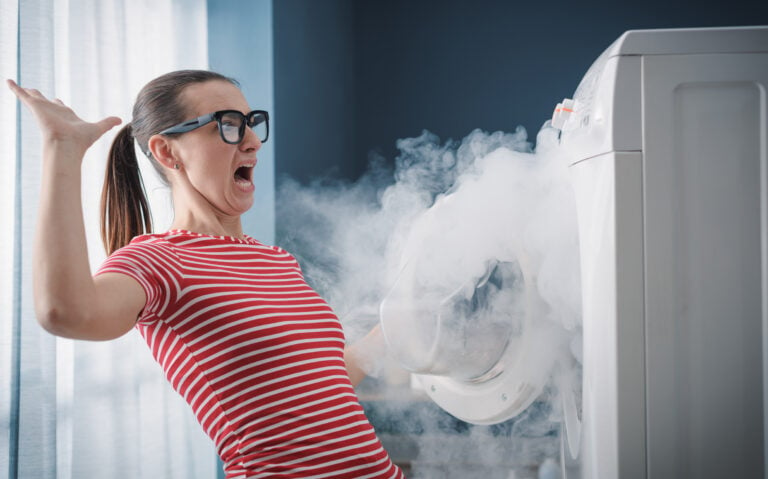
- Ignoring a burning smell and running another load: A burning smell during dryer operation is an immediate warning to stop the appliance and investigate. Running the next load anyway to see if the smell goes away is treating an active warning sign as normal operation.
- Allowing the area behind and beneath the dryer to accumulate lint: Lint that escapes from loose duct connections or from behind the appliance collects in the space between the dryer and the wall and on the floor beneath the appliance. This lint is in close proximity to the heat generated by the appliance motor and can ignite independently of the duct system.
How to Build a Clothes Dryer Fire Safety Routine That Actually Holds
Dryer fire prevention is not a one-time project. It is a set of habits that need to be maintained consistently over the life of the appliance. The challenge is that the things that make dryers dangerous accumulate gradually and invisibly, which makes it easy to defer maintenance without feeling an immediate consequence. Building the right routine removes the need to remember and decide each time.
The Daily Habit
Clean the lint trap before every load. This should be as automatic as starting the cycle. Put the habit on the same mental trigger as pressing the start button, and it will not be skipped.
The Monthly Habit
Wash the lint trap screen with soap and water. Check that the dryer cabinet area is free of accumulated lint. Run the dryer for one cycle and stand outside briefly to confirm that the exterior vent cap is opening and closing normally.
The Seasonal Habit
Inspect the exterior vent cap for damage, debris accumulation, pest activity, or flap failure. Check the transition duct behind the dryer for kinks, compression, or visible damage. Make sure the area around and behind the appliance is clear of combustible materials.
The Annual Professional Service
Schedule professional dryer vent cleaning at least once per year. In high-use households or humid climates where year-round dryer use creates above-average accumulation rates, this service protects against the buildup that no amount of at-home maintenance can fully address.
| Habit | Frequency | Who Performs It |
| Lint trap cleaning | Every load | Homeowner |
| Lint screen washing | Monthly | Homeowner |
| Exterior cap inspection | Seasonally | Homeowner |
| Transition duct check | Seasonally | Homeowner |
| Professional vent cleaning | Annually or every 6 months | Professional |
| Full dryer inspection | Annually | Professional |
Protect Your Home With a Dryer Fire Prevention Plan That Starts Today
Dryer fire prevention is not complicated, but it does require consistency. The nine tips covered in this guide are not extraordinary measures. They are straightforward habits and scheduled maintenance tasks that anyone can implement, and together they reduce one of the most common and most preventable causes of residential fires to a genuinely manageable risk. The households that experience dryer fires are almost uniformly not the ones that maintained their systems. Make the commitment to be in the other category.
Pro Shine Professional Cleaning helps homeowners throughout Savannah and surrounding areas stay ahead of dryer fire risk with professional dryer vent cleaning, thorough inspection, and the kind of post-service documentation that gives you confidence the job was done right. Whether you are scheduling your annual cleaning, responding to a warning sign, or simply not sure when your vent was last professionally serviced, contact us today and let our team assess where your system stands and what it needs to keep your home safe.
Clean Air Is Just A Call Away!